
You’ve typed it a hundred times, and it still trips you up. Is it emaculate or immaculate? The Emaculate vs Immaculate mix-up is one of the most common spelling stumbles in English, and it shows up everywhere: resumes, product reviews, wedding toasts, even real estate listings. This guide settles the debate for good, walks through the meaning, the history, and the exact moment you should reach for this word – so you never second-guess the spelling again.
The Short Answer?
Immaculate is correct. Emaculate is the misspelling that trips up even confident writers. When you’re weighing Emaculate vs Immaculate, remember this: only one of them appears in modern dictionaries as a standard word. The other survives only as a strange historical footnote (more on that below).
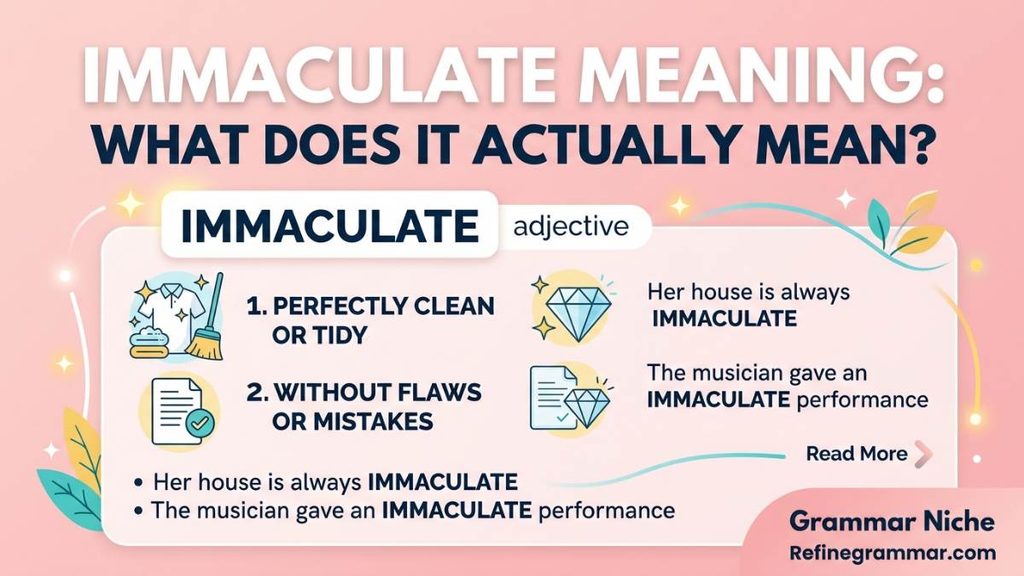
Immaculate Meaning: What Does It Actually Mean?
Simple Breakdown
Immaculate is an adjective that describes something spotless, flawless, or free from any imperfection. Think of a freshly cleaned kitchen counter, a perfectly ironed shirt, or a flawless piece of writing. At its core, the word points to purity – nothing out of place, nothing wrong.
Religious Meaning: Immaculate Conception vs Immaculate Heart of Mary
In Catholic teaching, Immaculate Conception refers to the belief that Mary was conceived without original sin. Immaculate Heart of Mary is a separate devotional title honoring her purity and virtue. Both phrases lean on the same root meaning: free from stain, in this case a spiritual one rather than a physical one.
Immaculate Meaning in German (Bedeutung)
German speakers researching Emaculate vs Immaculate usually land on the word makellos, which translates roughly to flawless or without blemish. The German un be fleckt (literally unstained) is also used in religious contexts, mirroring the English Immaculate Conception (Unbefleckte Empfängnis).
Immaculate Definition in Grammar and Usage
Immaculate Definition (Grammar)
Grammatically, immaculate functions only as an adjective. It modifies nouns and never stands in as a verb or noun itself. You’ll find it before a noun (an immaculate lawn) or after a linking verb (the lawn looks immaculate).
Example:
Her immaculate reputation took years to build. Here, immaculate describes the noun reputation, showing it’s untarnished and beyond reproach.
Immaculate Adjective Meaning in Context
Context shifts the flavor of the word without changing its core meaning. An immaculate house speaks to cleanliness. An immaculate record speaks to a flawless history. An immaculate performance speaks to technical precision. The thread connecting all three: zero visible flaws.
Is Emaculate a Real Word?
Is emaculate a word?
Technically, yes – but not in the way most people mean it. Emaculate once existed as an obsolete verb in old English dictionaries, and it meant the opposite of what people assume.
Emaculate Meaning
Historical dictionaries define emaculate as to clear from spots or stains. It comes from the Latin emaculare, built from the prefix e- (out) plus macula (spot). So while immaculate means without spots, the archaic emaculate meant to remove spots. It hasn’t been in everyday use for centuries, and no modern dictionary lists it as standard English.
Why This Matters
When people write emaculate today, they’re not reaching for this dead verb – they’re simply misspelling immaculate. Understanding this history helps explain why the confusion happens: your brain hears the sound and guesses at the spelling, landing on a word that technically exists but means something completely different (and isn’t used anymore anyway).
Learn More: Accross vs Across, Which Is the Correct Spelling?
Emaculate vs Immaculate Difference (Side-by-Side)
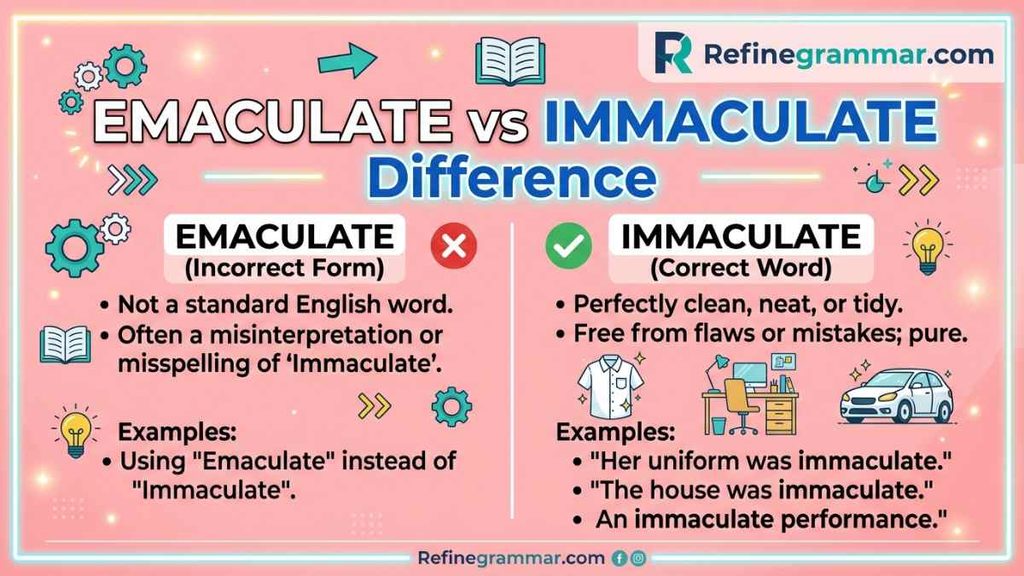
| Feature | Emaculate | Immaculate |
| Correct spelling? | No (as intended usage) | Yes |
| Part of speech | Obsolete verb | Adjective |
| Modern dictionary status | Not listed as standard | Standard, widely used |
| Meaning | To remove spots (archaic) | Spotless, flawless |
| Everyday usage | Essentially none | Extremely common |
This table makes the Emaculate vs Immaculate comparison easy to scan: one word belongs in a history book, and the other belongs in your everyday vocabulary.
Why Do People Misspell Immaculate?
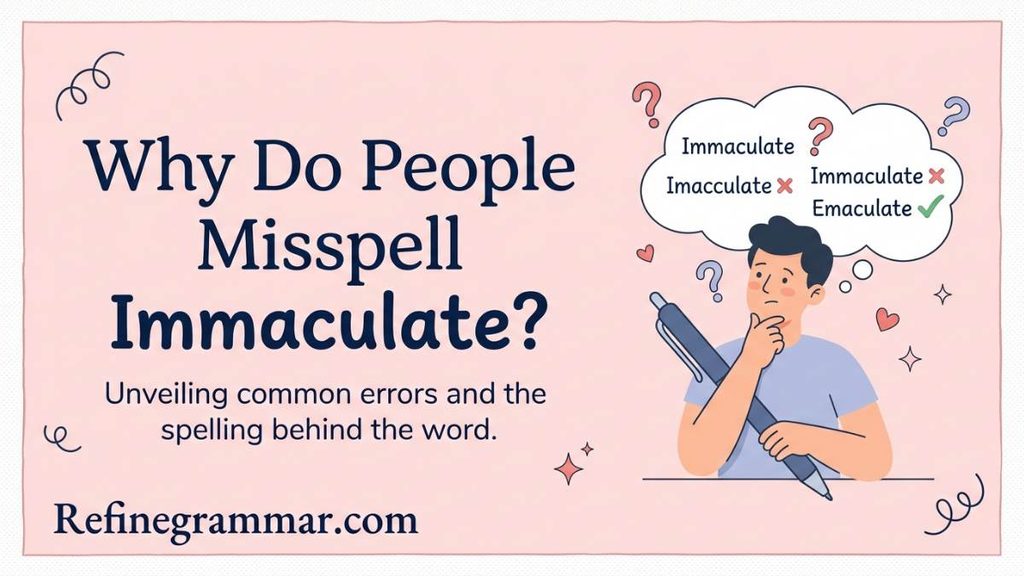
Common Reasons
- The word starts with a soft ih sound that’s easy to mishear as eh.
- Autocorrect doesn’t always catch it, especially in casual typing.
- Similar-sounding words (like emancipate or emasculate) create cross-wiring in memory.
- Non-native English speakers often transliterate based on pronunciation rather than spelling rules.
Related Examples
This isn’t a one-off problem. English is full of near-twin words that cause the same kind of confusion: affect vs effect, compliment vs complement, and emigrate vs immigrate all trip people up for similar reasons – subtle sound differences that don’t match the spelling.
The Origin of Immaculate (This Makes It Stick)
Immaculate Word Origin
Immaculate traces back to the Latin immaculatus, formed from the prefix im- (not) and maculatus (spotted or stained). It entered English in the mid-1400s through Middle English, originally used mostly in religious contexts before broadening into everyday speech.
Why This Helps
Once you know that im- means not and macula means spot, the spelling almost writes itself. Immaculate literally means not spotted. Anchor the prefix in your memory, and the Emaculate vs Immaculate confusion tends to disappear.
How to Spell Immaculate Correctly (Without Second Guessing)
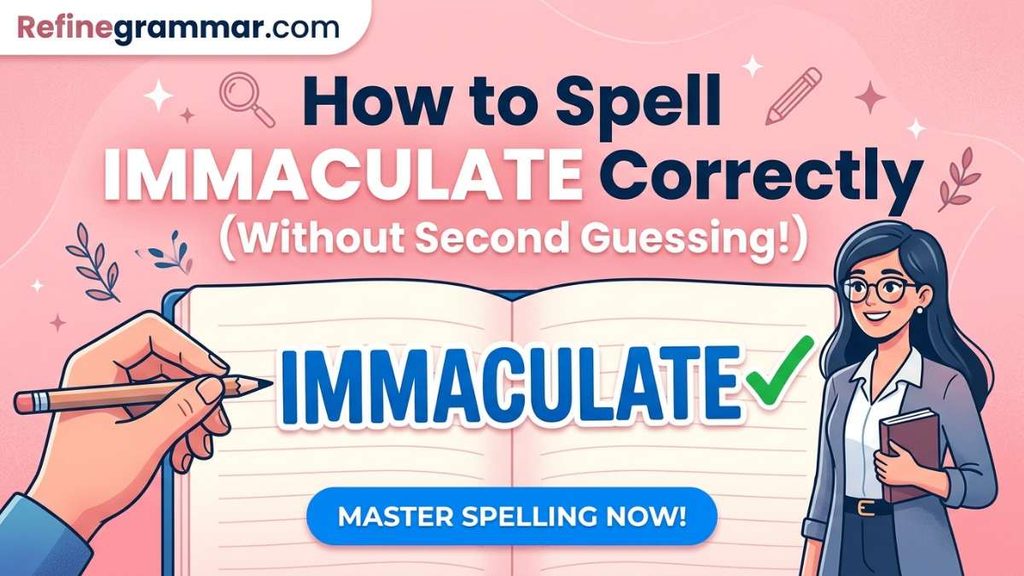
Memory Hacks That Work
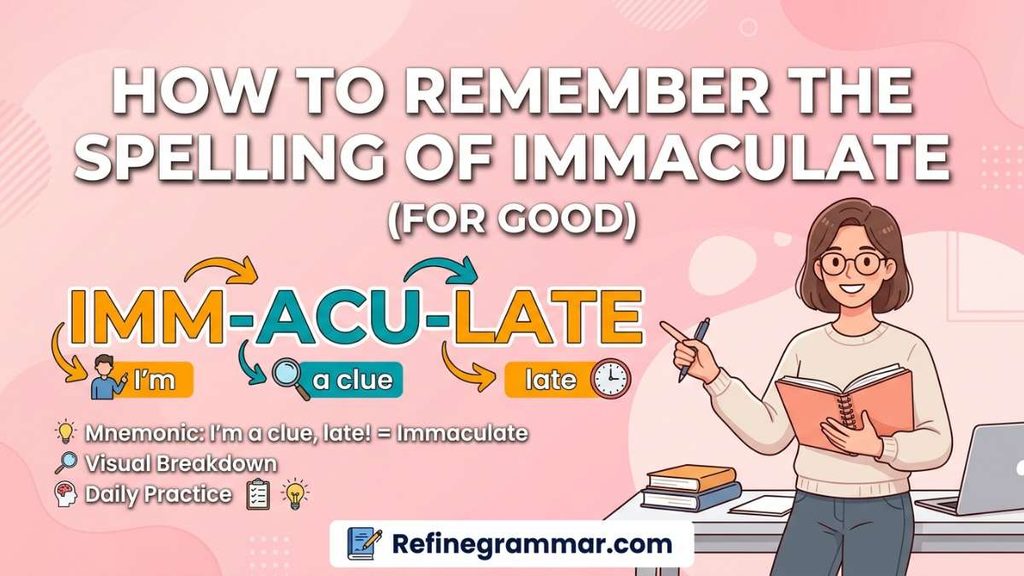
- Break it down: IM + MACULATE. Im negates, and maculate means stained.
- Link it to immune: both start with im, both suggest protection from something bad.
- Picture the Immaculate Conception – a phrase most people already spell correctly out of habit.
- Say it slowly out loud: im-MAC-yuh-lit. Hearing the syllables separately reinforces the correct pattern.
Quick Checklist
- Starts with im, not em.
- Has one m and one c.
- Ends in -ate, not -it or -et.
- Functions only as an adjective.
How to Use Immaculate in a Sentence (Real Examples)
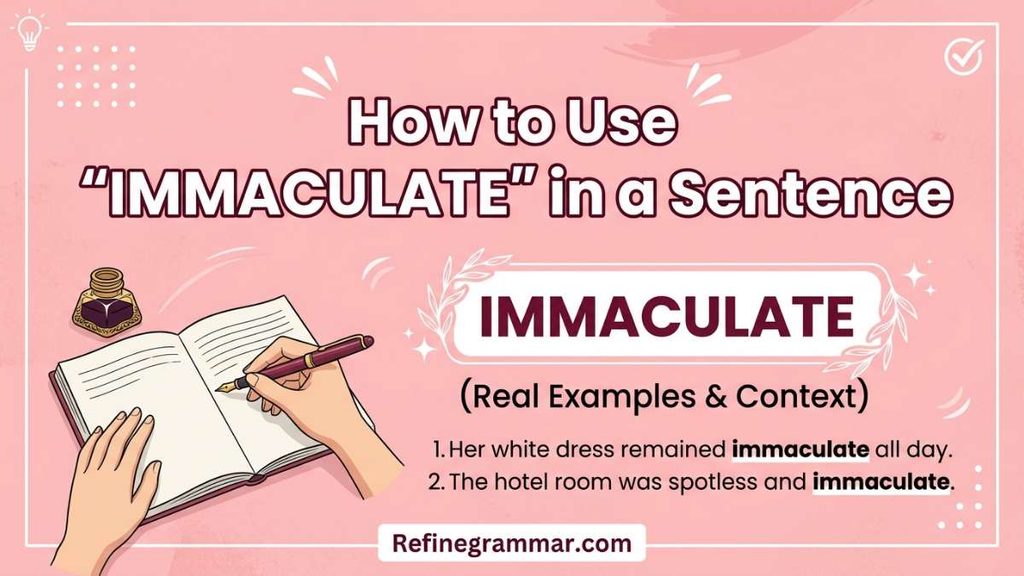
Immaculate in a Sentence (Everyday Use)
The new apartment was immaculate, with not a speck of dust anywhere. This kind of sentence shows the word doing its most common job: describing physical cleanliness.
Immaculate Example Sentences by Context
Cleanliness
The hotel room was immaculate when we checked in.
Performance
The gymnast delivered an immaculate routine, scoring a perfect ten.
Appearance
He arrived at the interview in an immaculate suit, pressed and spotless.
Immaculate View Meaning
When someone describes an immaculate view, they mean a scene so clear, clean, and unobstructed that it feels flawless – think mountain vistas on a cloudless day or a skyline with no haze in sight.
When to Use Immaculate in English
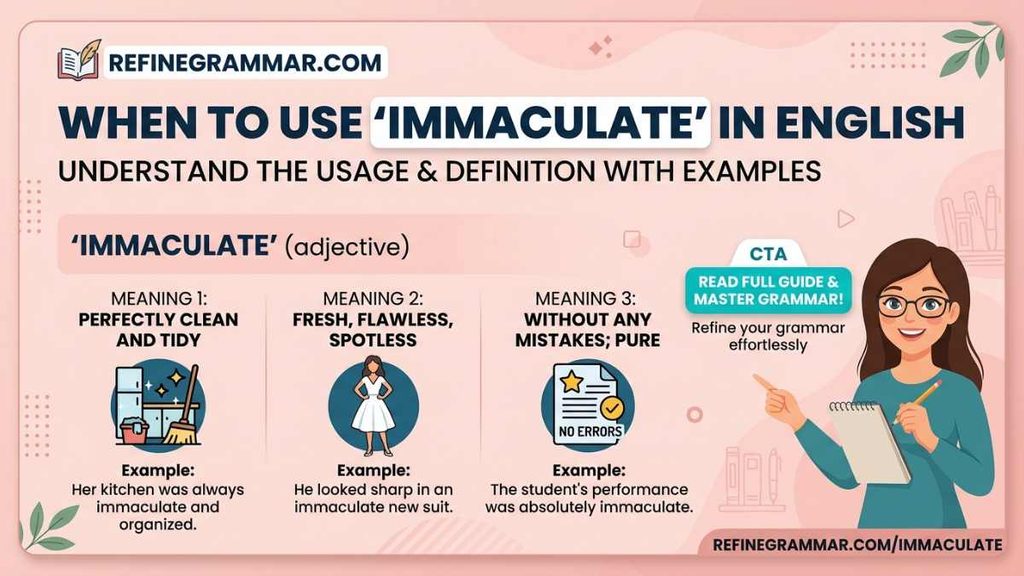
Best Situations
Reach for immaculate when you want to emphasize total absence of flaws – describing homes for sale, professional appearances, flawless records, or precise performances. It carries a slightly formal, polished tone that works well in writing meant to impress.
Avoid Overuse
Because immaculate is a strong word, using it too often waters down its impact. Save it for situations that genuinely deserve the emphasis, and lean on simpler words like clean or tidy for everyday descriptions.
Immaculate Near Me — Local Search Intent
Searches like immaculate condition homes near me usually come from house hunters looking for properties in move-in-ready shape. Real estate listings use the word deliberately because it signals zero repairs needed and pristine upkeep – a small word doing a lot of persuasive work.
Immaculate vs Perfect vs Impeccable
Immaculate vs Perfect
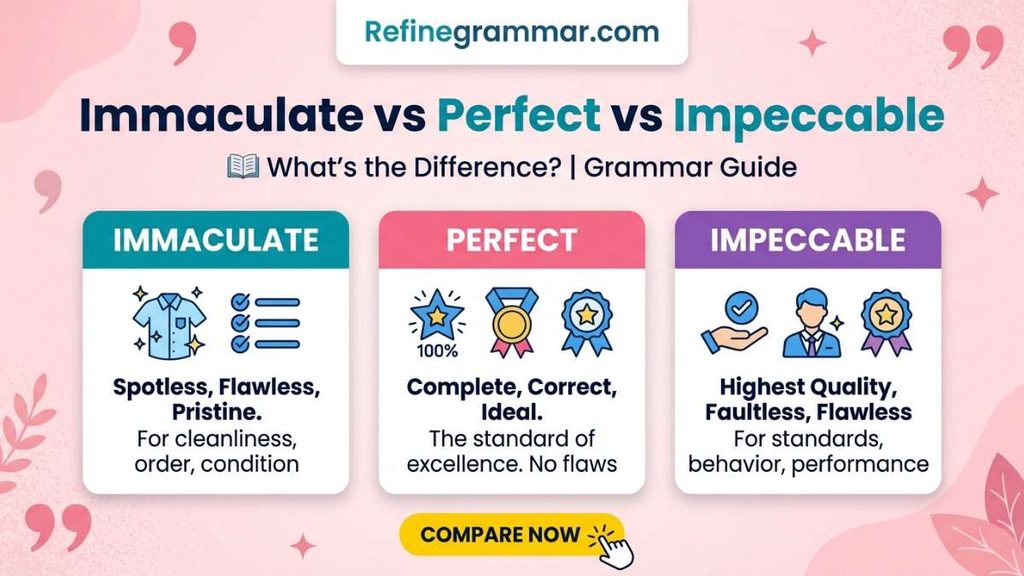
Perfect is broader, covering flawlessness in any sense – taste, timing, or design. Immaculate leans specifically toward cleanliness and the absence of visible flaws or stains, whether literal or figurative.
Immaculate vs Impeccable
Impeccable usually describes behavior, taste, or judgment (impeccable manners), while immaculate more often describes appearance or physical condition. They overlap, but immaculate skews visual.
Comparison Table
| Word | Best Used For | Example |
| Immaculate | Cleanliness, flawless appearance | An immaculate white dress |
| Perfect | General flawlessness of any kind | A perfect score on the exam |
| Impeccable | Behavior, taste, judgment | Impeccable table manners |
Words Similar to Immaculate (Synonyms and Antonyms)
Immaculate Synonym List
- Spotless
- Pristine
- Flawless
- Pure
- Unblemished
- Impeccable
- Faultless
Immaculate Antonyms
- Filthy
- Stained
- Flawed
- Tarnished
- Sloppy
- Messy
Common Spelling Mistakes Like Emaculate
Other Grammar Spelling Errors
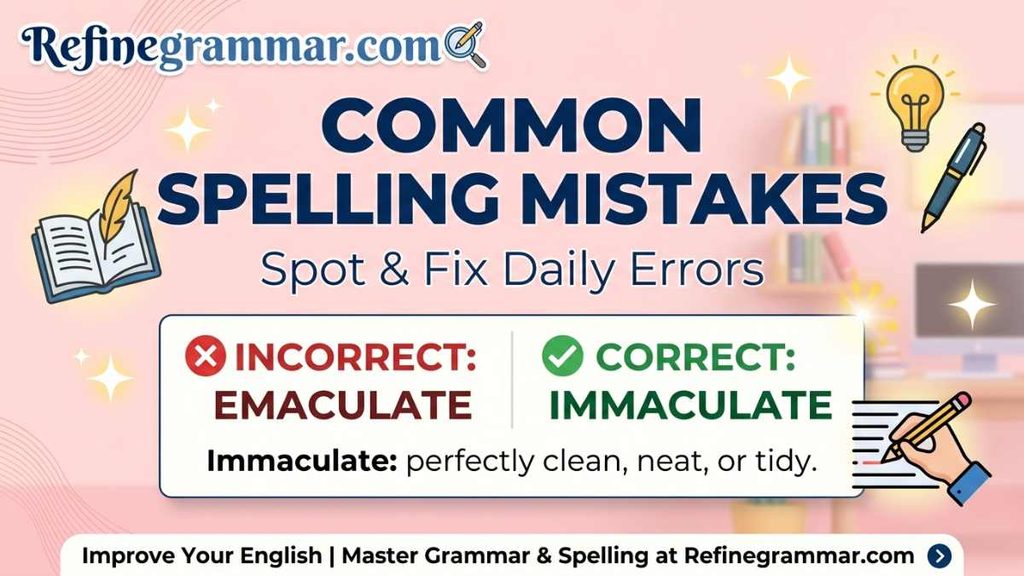
The Emaculate vs Immaculate mix-up sits alongside other frequent stumbles: definately instead of definitely, recieve instead of receive, and seperate instead of separate. Each error usually comes down to trusting your ear over the actual spelling rule.
Why It Matters
Spelling mistakes like this one can undercut your credibility, especially in professional writing, resumes, or marketing copy. A single misspelled word in an otherwise polished paragraph draws the eye and can make a reader question your attention to detail.
One Word, Big Impact
Candidate A
My work history is emaculate. This sentence stumbles right out of the gate, undercutting the very claim it’s trying to make.
Candidate B
My work history is immaculate. Same claim, correct spelling, and instantly more convincing. This small swap shows exactly why getting Emaculate vs Immaculate right carries real weight in high-stakes writing.
How to Remember the Spelling of Immaculate (For Good)
Proven Techniques
- Repetition: write the word out five times, slowly, focusing on the im start.
- Association: connect it to other im- negation words like impossible or immature.
- Visualization: picture a spotless, gleaming surface every time you write the word.
- Use it in a sentence of your own at least once a week until it sticks.
Spelling Confusion Immaculate
Even confident writers pause here, because em and im sound nearly identical when spoken quickly. The fix isn’t complicated: slow down, remember the Latin root, and trust that immaculate – with an i – is the only version that belongs in modern writing.
Key Takeaways (Quick Breakdown)
- Immaculate is the correct, modern spelling; emaculate is not standard usage.
- Emaculate was once an obsolete verb meaning to remove spots – the opposite of what people intend today.
- Immaculate comes from Latin immaculatus, meaning not spotted.
- Use immaculate to describe cleanliness, flawless performance, or spotless appearance.
- When in doubt in the Emaculate vs Immaculate debate, remember: im negates, so immaculate means not stained.
FAQs
What does emmaculate mean?
Emmaculate isn’t a recognized word at all – it’s simply a misspelling of immaculate, with an extra m added by mistake.
Is immaculate a compliment?
Yes. Calling something immaculate is a strong compliment, signaling that it’s flawless, clean, or exceptionally well kept.
Is emaculate a real word?
It technically existed centuries ago as an obsolete verb, but it isn’t used in modern English and isn’t the word you want when describing something spotless.
Is immaculant a real word?
No. Immaculant isn’t a recognized English word; it’s another common misspelling of immaculate.
What is a better word for immaculate?
Depending on context, spotless, pristine, or flawless all work as strong alternatives.
Is immaculate a positive word?
Yes, it’s almost always used positively, describing something admirably clean, pure, or free of error.
Can immaculate mean perfect?
In many contexts, yes – especially when describing flawless performance or appearance, though it leans more toward spotless than ideal.
Is the word immaculate good or bad?
It’s a positive word, used to praise cleanliness, precision, or purity.
What does immaculation mean?
Immaculation isn’t a standard English word; the correct noun form is immaculateness or immaculacy.
Is it emaculate or immaculate?
It’s immaculate. Emaculate is the misspelling to avoid.
Final Thought
The Emaculate vs Immaculate question really comes down to one small prefix and one big habit. Remember the Latin root, practice the spelling a few times, and you’ll never hesitate over this word again.
