
If you’ve ever paused mid-sentence wondering whether to write “placque” or “plaque,” you’re not alone. This mix-up shows up in emails, school assignments, and even printed awards. This guide settles the placque vs plaque debate once and for all, with clear definitions, real examples, and answers to every question you might have.
Placque vs Plaque Difference (No Confusion)
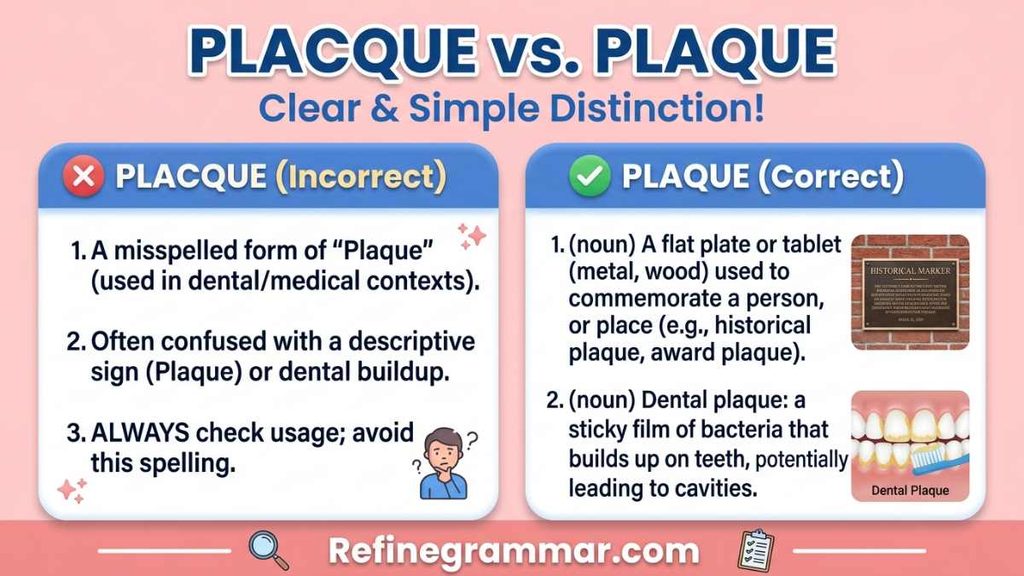
Here’s the short version: plaque is correct, and placque is a common misspelling. There’s no legitimate context where “placque” is the right choice. The confusion usually comes from how the word sounds when spoken quickly, or from mixing it up with words like “plague.”
| Term | Correct? | Notes |
| Plaque | Yes | Standard English spelling |
| Placque | No | Common misspelling, not in major dictionaries |
Placque vs Plaque Meaning (Simple and Practical)
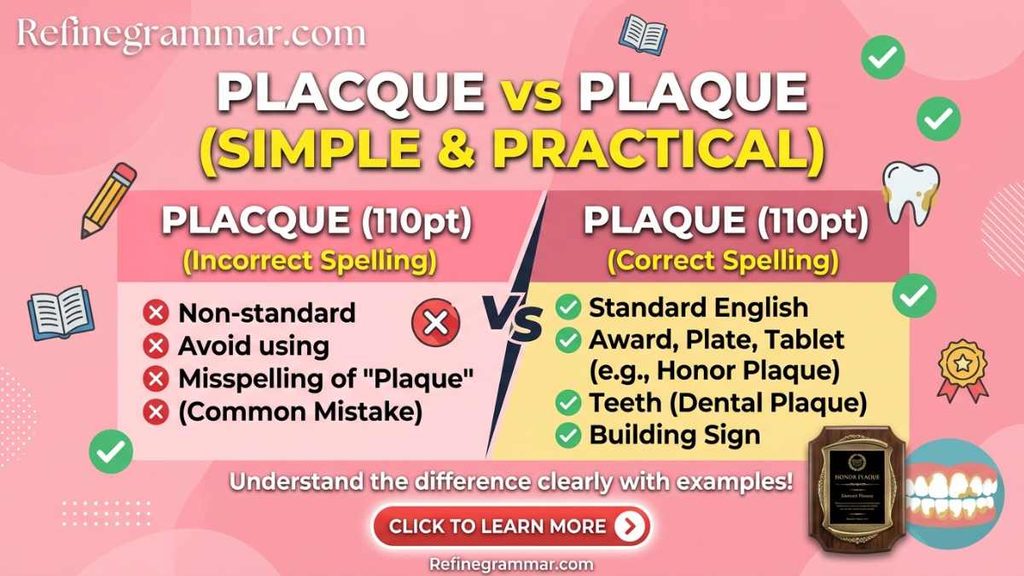
Understanding plaque meaning starts with knowing it has several uses. It can refer to a flat commemorative object, a coating on teeth, or a buildup inside arteries.
Plaque Meaning in English
In everyday English, plaque most often points to a flat piece of metal, wood, or stone. People mount it on walls to mark an event, honor someone, or celebrate an achievement.
Simple Definition
A plaque is a flat plate or slab, usually bearing text or an image, fixed to a surface for decoration, recognition, or information.
Is Placque a Real Word? (Honest Answer)
No. “Placque” isn’t a recognized word in English. Dictionaries like Merriam-Webster and Cambridge don’t list it. If you search for it, you’ll likely see spell-check tools flag it right away. Treat it as a typo, not an alternative spelling.
Learn More: In Process vs In Progress: The Ultimate Grammar Guide
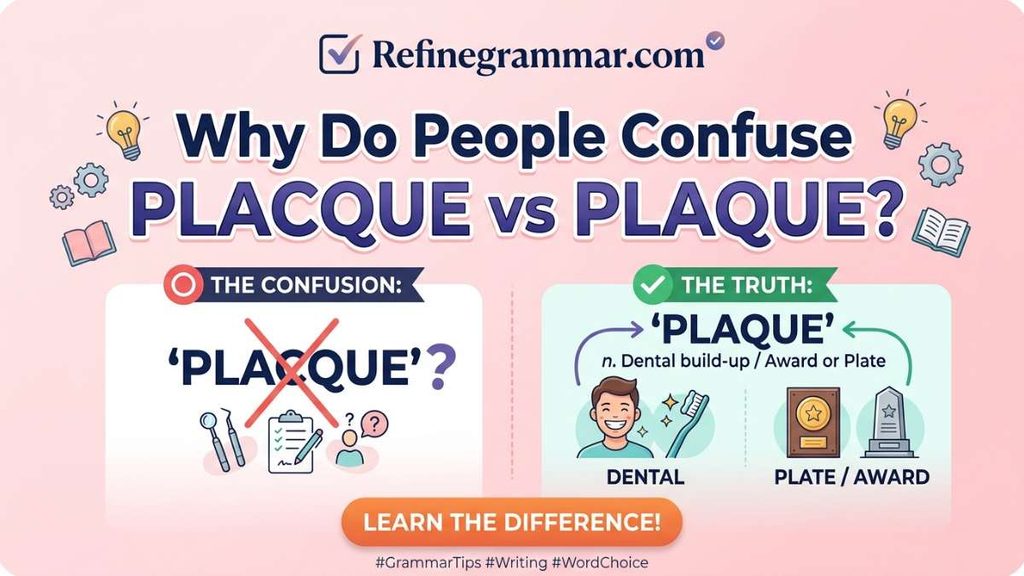
Why Do People Confuse Placque vs Plaque?
Main Causes
- Phonetic guessing: The extra “c” feels natural to some writers because of words like “lacquer.”
- Autocorrect gaps: Some devices don’t always catch the error.
- Visual similarity: “Placque” looks close enough to “plaque” to slip past a quick read.
- Non-native spelling patterns: Learners sometimes borrow spelling habits from other languages.
Plaque vs Plack — Is It Plaque or Plack?
What Is a Plack?
A plack is an old Scottish coin, historically worth a small fraction of a pound. It’s a completely different word with no connection to plaques today.
Is It Plaque or Plack?
If you’re talking about an award, a wall decoration, or dental buildup, the word you want is plaque. Plack only applies to historical currency.
Plaque Meaning in Detail (All Contexts Explained)
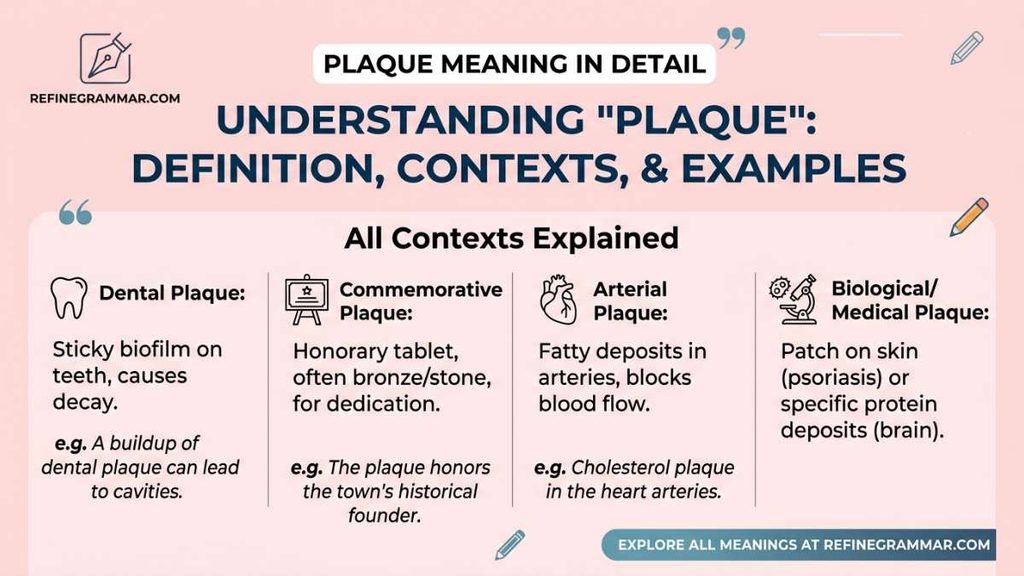
Plaque shows up in several fields, and each one uses the word a little differently:
- Recognition and awards – trophies, certificates on metal.
- Memorials – historical markers.
- Dentistry – bacterial film on teeth.
- Medicine – buildup in arteries or skin patches.
Plaque Award Meaning (Recognition and Achievement)
An award plaque celebrates accomplishment. Companies, schools, and organizations hand them out to mark milestones, service, or performance.
Where It’s Used
You’ll spot plaques at corporate award ceremonies, graduation events, sports banquets, and retirement parties.
Real Example
A company might present a “5 Years of Service” plaque to an employee, engraved with their name and the date they joined.
Common Features of Award Plaques
- Engraved nameplates
- Wood, acrylic, or metal base
- Company or event logo
- A short message or quote
Plaque Spelling in Everyday Use (Wall, Trophy & Award Examples)
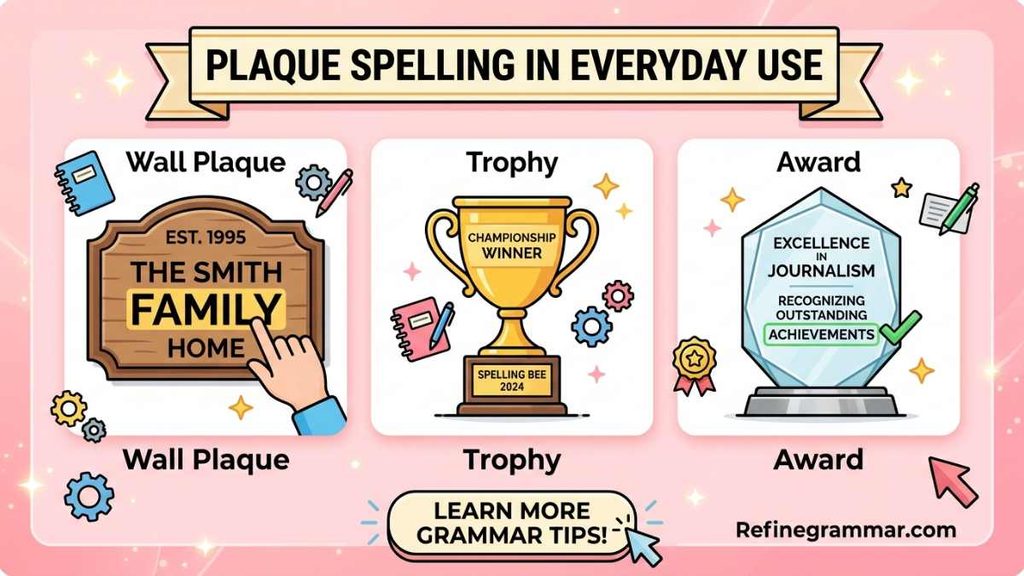
How Do You Spell Plaque for a Wall?
Spell it p-l-a-q-u-e, whether you’re mounting it on a home office wall or a public memorial.
How Do You Spell Plaque Like a Trophy?
Same spelling applies. A trophy plaque uses the identical word; only the shape and mounting style differ from a standalone trophy.
Memorial Plaque Meaning (History and Recognition)
A memorial plaque marks a historical event, person, or location. You’ll often see one outside old buildings or at battle sites.
Common Locations
- Historic homes
- Battlefields
- Universities
- Public parks
Purpose
Memorial plaques preserve stories for future generations. They give passersby a quick, factual snapshot of why a place matters.
Plaque Definition Medical (Scientific Explanation)
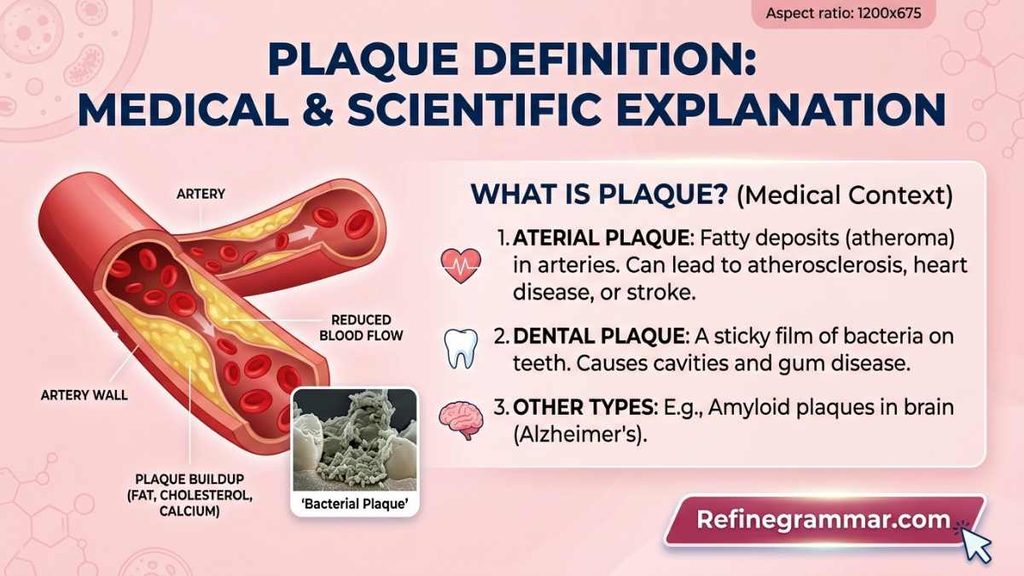
In medicine, plaque describes a raised patch on skin (as in psoriasis) or a buildup of fatty deposits inside blood vessels. Doctors use the word broadly to describe any abnormal, flat-to-raised accumulation in the body.
Soft Plaque vs Hard Plaque (Key Differences)
| Type | Texture | Risk Level |
| Soft plaque | Fatty, unstable | Higher risk of rupture |
| Hard (calcified) plaque | Firm, stable | Lower immediate rupture risk, but narrows arteries |
Dental Plaque Meaning (Teeth and Oral Health)
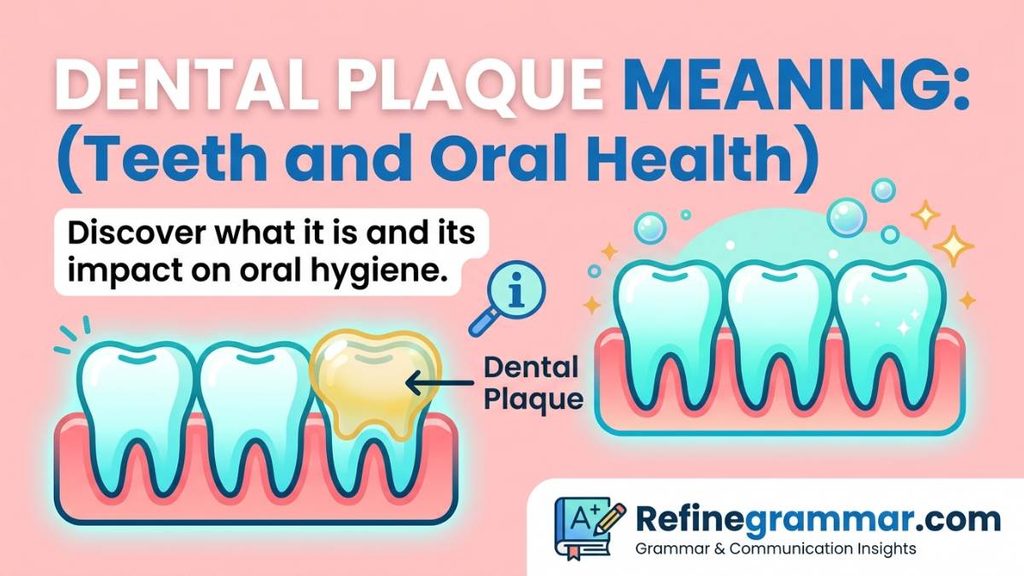
What Does Plaque Mean in Dentistry?
Dental plaque is a sticky film of bacteria that forms on teeth throughout the day. It builds up from food particles, saliva, and bacteria interacting on the tooth surface.
Important Facts
- Forms within hours of brushing
- Feels fuzzy or filmy on teeth
- Left untreated, it hardens into tartar
Consequences of Plaque Buildup
Untreated plaque can lead to cavities, gum inflammation, and eventually gum disease.
Example
Skipping your nightly brushing routine even once lets plaque bacteria multiply overnight.
Plaque vs Tartar: What’s the Difference?
What Is Worse, Plaque or Tartar?
Tartar is worse because it’s hardened plaque that only a dentist can remove. Plaque, by contrast, brushing and flossing can clear at home.
How Do I Know If It’s Plaque or Tartar?
Plaque feels soft and fuzzy; tartar feels hard and often looks yellow or brown near the gumline.
What Kills Plaque on Your Teeth?
Regular brushing, flossing, antibacterial mouthwash, and routine dental cleanings all help control plaque.
Plaque in Arteries Meaning (Serious Health Context)
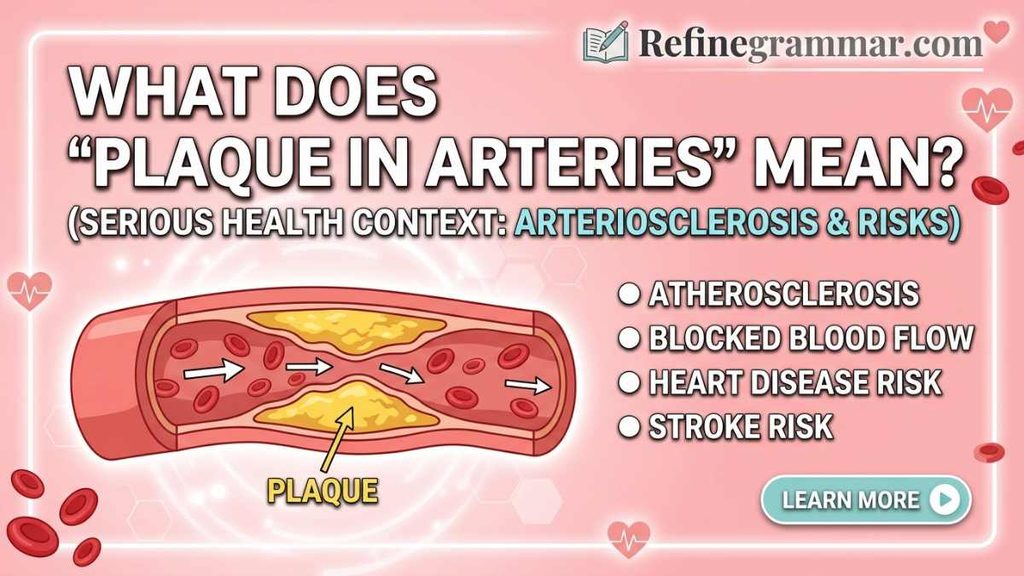
What Is Arterial Plaque?
Arterial plaque is a buildup of fat, cholesterol, and other substances along artery walls, a condition known as atherosclerosis.
Why It’s Dangerous
As plaque accumulates, it narrows arteries and restricts blood flow, raising the risk of heart attack or stroke.
Medical Insight
Doctors often recommend diet changes, exercise, and sometimes medication to manage arterial plaque before it becomes severe.
Does Plaque on Teeth Mean Plaque in Arteries?
Not directly, but they share a name for a reason: both describe unwanted buildup. Dental plaque and arterial plaque form through different processes, though some research links poor oral health to heart health risks.
Plaque Pronunciation (Clear and Easy Guide)
Correct Pronunciation
Plaque is pronounced “plak,” rhyming with “back” or “track.” The final “que” stays silent on the “u” and sounds like a hard “k.”
Quick Tips
- Think of it rhyming with “black.”
- Don’t pronounce the “u” at all.
- Say it fast: “plak,” not “play-cue.”
Why Is Plaque Spelled This Way? (Word Origin Explained)
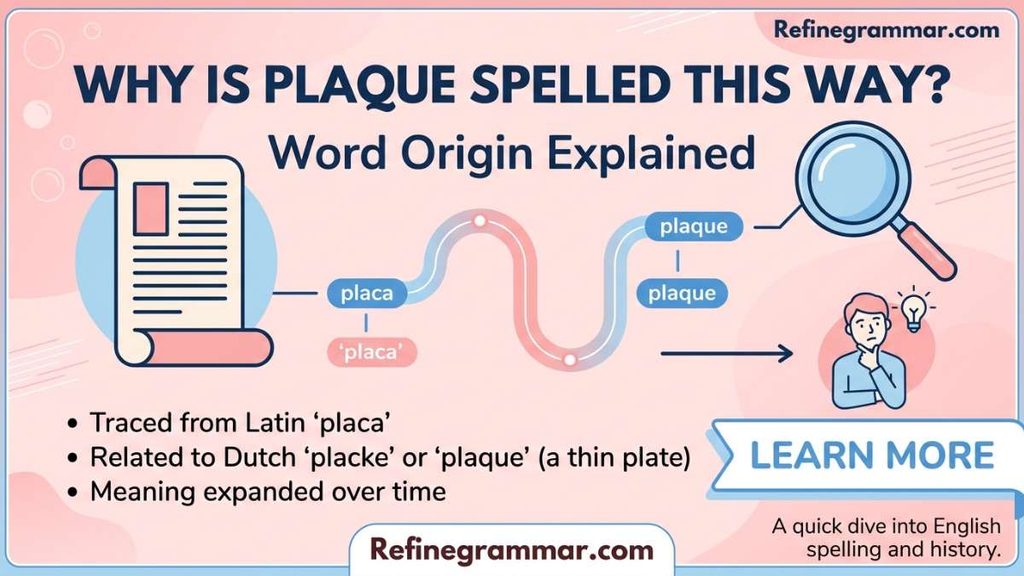
Plaque Word Origin
The word plaque traces back to French, borrowed from a Dutch root referring to a flat, thin object or patch.
What This Means
The “que” ending reflects its French roots, similar to words like “antique” and “unique.”
What Are the Different Ways to Spell “Plaque”?
There’s only one correct English spelling: plaque. Variants like “plack” and “placque” refer to different words or are simply incorrect.
Placque vs Plaque Pronunciation Comparison
Since “placque” isn’t a real word, it has no official pronunciation. If people say it, they usually just mispronounce plaque by adding an unnecessary “c” sound in their head while writing.
Plaque vs Placque Difference (Complete Breakdown)
| Feature | Plaque | Placque |
| Correct spelling | Yes | No |
| Found in dictionaries | Yes | No |
| Used in medical/dental fields | Yes | No |
| Used in awards/memorials | Yes | No |
Plaque Synonyms (Context-Based Alternatives)
For Awards
Tablet, marker, commemorative plate, honor board.
For Medical Context
Deposit, buildup, film (dental), lesion (skin).
What’s Another Name for a Plaque?
Depending on context, you might hear “tablet” for wall displays or “buildup” for medical plaque.
Plaque vs Plate Meaning (Avoid Another Mistake)
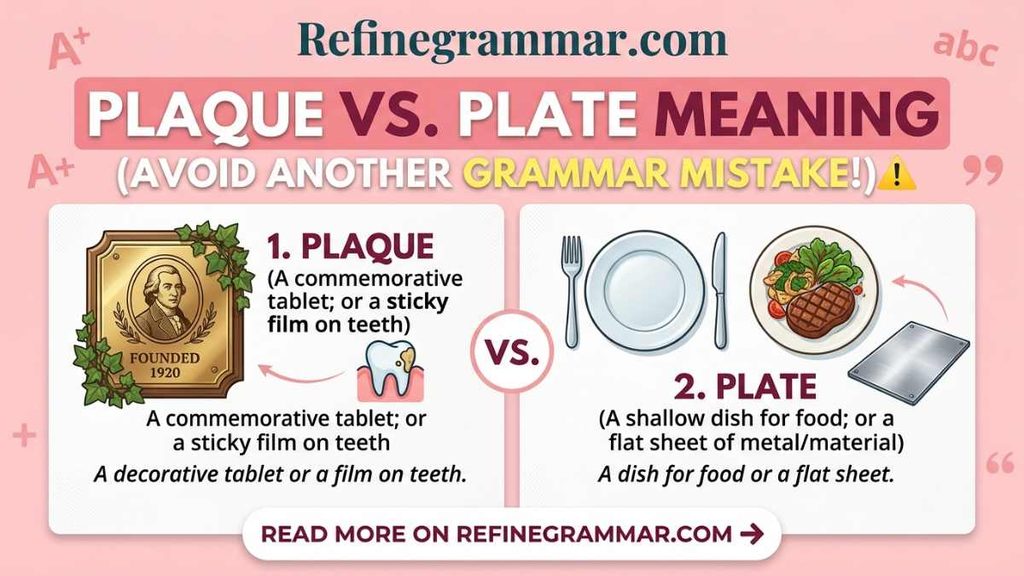
A plate is a flat, often circular object used for serving food or displaying items generally. A plaque is specifically inscribed or decorated for recognition, memory, or information — not for holding food.
How to Use Plaque in a Sentence (Real Examples)
Examples
- The city unveiled a new plaque honoring the fallen firefighters.
- Her dentist warned her about plaque buildup near the gumline.
- The retiring manager received an engraved plaque from the whole team.
Placque vs Plaque Examples (Correct vs Incorrect)
Incorrect
- “We ordered a placque for the ceremony.”
- “The dentist checked for placque on my molars.”
Correct
- “We ordered a plaque for the ceremony.”
- “The dentist checked for plaque on my molars.”
Common Mistakes to Avoid

Using “Placque”
Always double-check before submitting formal documents, orders for engraved items, or medical write-ups.
Confusing Contexts
Don’t assume dental plaque and arterial plaque work identically; treatment and causes differ.
Mispronouncing the Word
Avoid adding extra syllables. It’s one crisp sound: “plak.”
Case Study: A Small Error with Big Impact
Scenario
A company ordered 50 engraved awards for its annual gala.
Problem
The design file used “placque” instead of “plaque,” and nobody caught it before production.
Correct Version
The vendor had to reprint every award with the correct spelling, delaying the event by two weeks.
Result
The company now runs a spell-check step before approving any engraved order, a simple fix that avoided a repeat mistake.
Quick Practice (Reinforce What You Learned)
Fill in the Blank
“The dentist recommended flossing to remove ______ before it hardens into tartar.”
Fix the Sentence
“They gave him a placque for his years of service.” (Fix: plaque)
Challenge Round (Test Yourself Without Hints)
Try writing three sentences using plaque in different contexts: award, dental, and arterial.
Pro Tip (Make It Stick for Good)
Remember: plaque rhymes with “back,” and it never needs an extra “c.”
Key Takeaways (Simple and Clear)
- Plaque is correct; placque is not a word.
- Plaque applies to awards, memorials, dental buildup, and arterial deposits.
- Pronounce it “plak,” not “play-cue.”
- Tartar is hardened plaque that needs professional removal.
- The word traces back through French to older European roots.
Reference Cambridge Dictionary Definitions
For an authoritative definition, Cambridge Dictionary confirms plaque as both a flat inscribed object and a buildup on teeth, with no listing for “placque.”
FAQs
How Do You Spell Plaque for a Wall?
P-l-a-q-u-e, the same spelling used in every other context.
How Do You Spell Plaque Like a Trophy?
The spelling doesn’t change: plaque, regardless of the award’s shape or material.
How Do You Spell Plaque on Your Teeth?
Still plaque. Dental plaque uses the identical spelling as award plaques.
What Is Worse, Plaque or Tartar?
Tartar is worse since it’s hardened and requires professional dental removal.
Is It Plaque or Plack?
It’s plaque for awards, memorials, and dental or arterial buildup. Plack refers only to an old Scottish coin.
What Is a Plack?
A plack was a small-value Scottish coin used historically, unrelated to modern plaques.
What’s Another Name for a Plaque?
Tablet or marker for physical displays; buildup or deposit for medical contexts.
What Are the Different Ways to Spell “Plaque”?
There’s only one correct spelling in English: plaque.
How Do I Know If It’s Plaque or Tartar?
Plaque feels soft and filmy; tartar feels hard and often shows discoloration.
What Kills Plaque on Your Teeth?
Brushing twice daily, flossing, antibacterial rinses, and regular dental cleanings all reduce plaque.
Final Thought
Plaque is the only correct spelling, no matter the context. Placque simply doesn’t exist in standard English. Keep this guide handy the next time you’re ordering an award, writing about oral health, or double-checking a memorial inscription.
