
If you’ve ever typed a sentence and paused, wondering studder vs stutter, you’re in good company. Thousands of people search this exact spelling question every month, and the answer is shorter than you’d expect. This guide clears up the confusion for good, walks through the meaning, pronunciation, and history of the word, and shows you how to use it correctly in real writing.
Which Spelling Is Correct?
Stutter is correct. Studder is not a recognized English word for the speech pattern it’s simply a common misspelling that comes from how the word sounds in fast, casual speech. Whenever you’re unsure about studder vs stutter, default to stutter every time; no major dictionary lists studder as an alternate spelling.
Studder or Stutter Meaning Explained Clearly
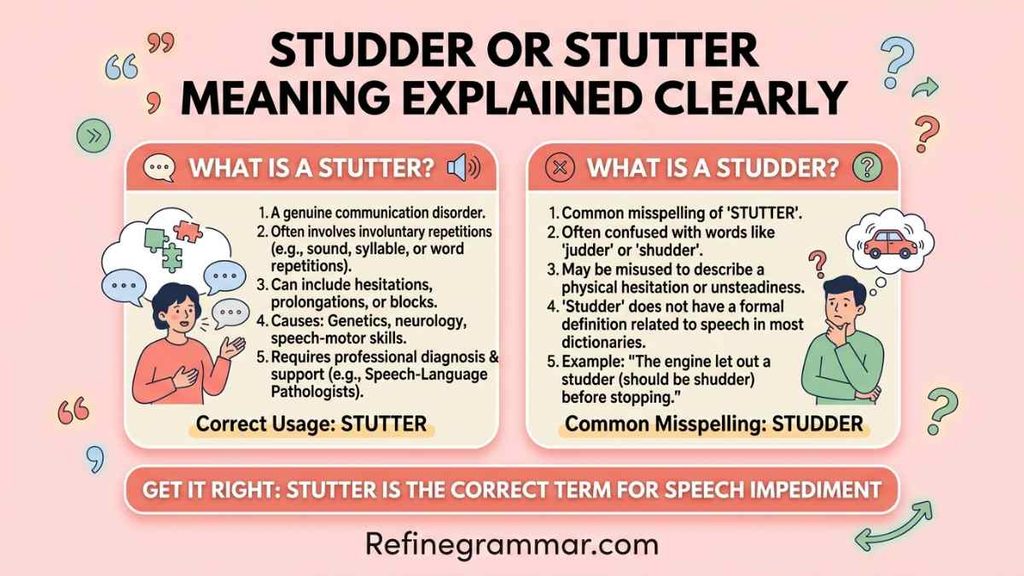
The studder vs stutter mix-up happens because the double “t” sound blurs into a soft “d” when people talk quickly. Stutter describes a speech pattern marked by repeated sounds, stretched syllables, or sudden blocks. Studder, on the other hand, carries no accepted meaning in everyday English, so it can never correctly replace stutter in a sentence.
What Does Stutter Mean in English?
As a verb, to stutter means to speak with involuntary breaks, repeated sounds, or blocked words. As a noun, a stutter refers to that speech pattern itself, as in “She has a slight stutter.” Merriam-Webster and other major dictionaries define the word this way, with no alternate spelling recognized.
Is Studder a Word? The Dictionary Answer
Almost, but not in the way most writers assume. Merriam-Webster lists “studder” as a rare, unrelated term for a worker who fits watch hairsprings into studs it has nothing to do with speech. Outside that narrow trade use, studder simply doesn’t appear as a standard entry, which settles the studder vs stutter question for good.
Why Do People Confuse Studder vs Stutter?
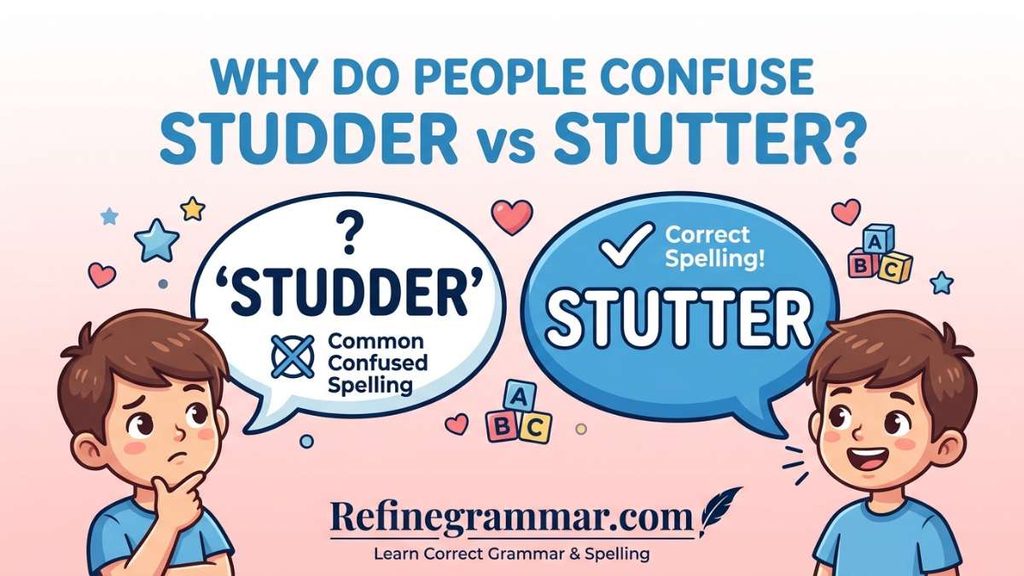
Three habits drive this mix-up again and again:
- Phonetic spelling writers type what they hear, and rapid speech softens “tt” into “d.”
- Autocorrect gaps some spell-checkers miss it because “studder” resembles a plausible surname.
- Visual similarity the two words share six of seven letters, so a quick glance can trick the eye.
How to Spell Stutter Correctly
Stutter has two syllables: “stut” and “ter.” Break it down letter by letter S-T-U-T-T-E-R with a double T in the middle, never a D. Say it slowly and separate it from casual pronunciation, and keeping the studder vs stutter distinction straight becomes second nature.
Stutter Pronunciation American vs British English
| Region | Pronunciation | Notes |
| American English | STUT-er (flapped T) | The middle “tt” often softens to a quick “d” sound, which is exactly what fuels the studder vs stutter confusion. |
| British English | STUT-uh (crisp T) | The “tt” stays sharper and the final “r” is barely pronounced. |
Despite the pronunciation gap, spelling never changes by region stutter stays stutter on both sides of the Atlantic.
Stutter Examples in Real Sentences
- He started to stutter when the interviewer asked about his last job.
- Her stutter became less noticeable once she practiced breathing techniques.
- The actor stuttered through his first audition, then found his rhythm.
- Kids sometimes stutter during a growth spurt in language skills, and it fades on its own.
Stutter Synonym and Related Words
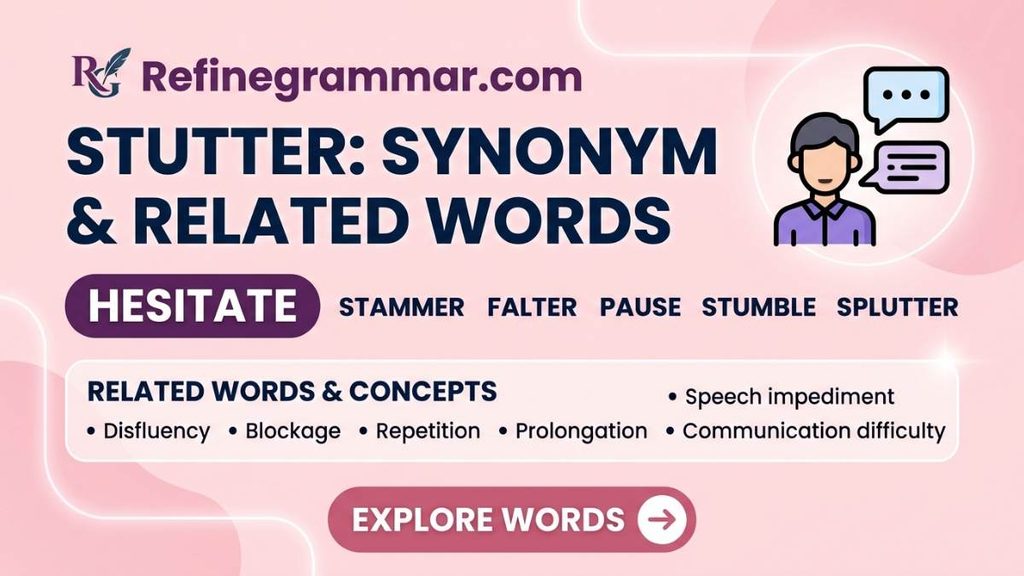
Stammer, stumble, falter, and hesitate all sit close to stutter in meaning, though each carries a slightly different shade. Stammer is the closest true synonym; falter leans toward hesitation rather than repeated sounds. Knowing these alternatives also helps answer the studder vs stutter question in different phrasing none of them are ever spelled with a D.
Stutter vs Stammer: What Is the Difference?
This is really a regional split, not a meaning split. Stutter dominates in American, Canadian, and Australian English, while stammer is the everyday term in British English. Speech-language professionals often treat “stutter” as the clinical standard worldwide.
Is It Stutter or Stammer?
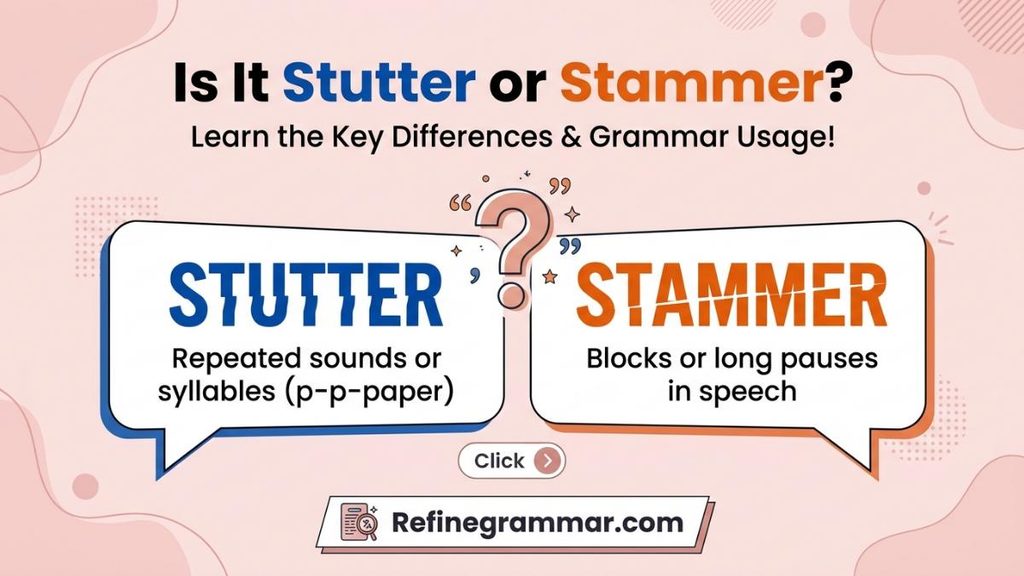
Both are correct choose stutter for American audiences and stammer for British ones. Neither term is more medically accurate than the other; they describe the same fluency condition.
Stuttering and Having a Stutter
“Stuttering” describes the ongoing action or condition, while “having a stutter” points to someone’s individual speech pattern. You can say someone stutters occasionally, or that they have a stutter as a lasting trait both phrasings are grammatically sound.
Studder vs Stutter: One Quick Reminder
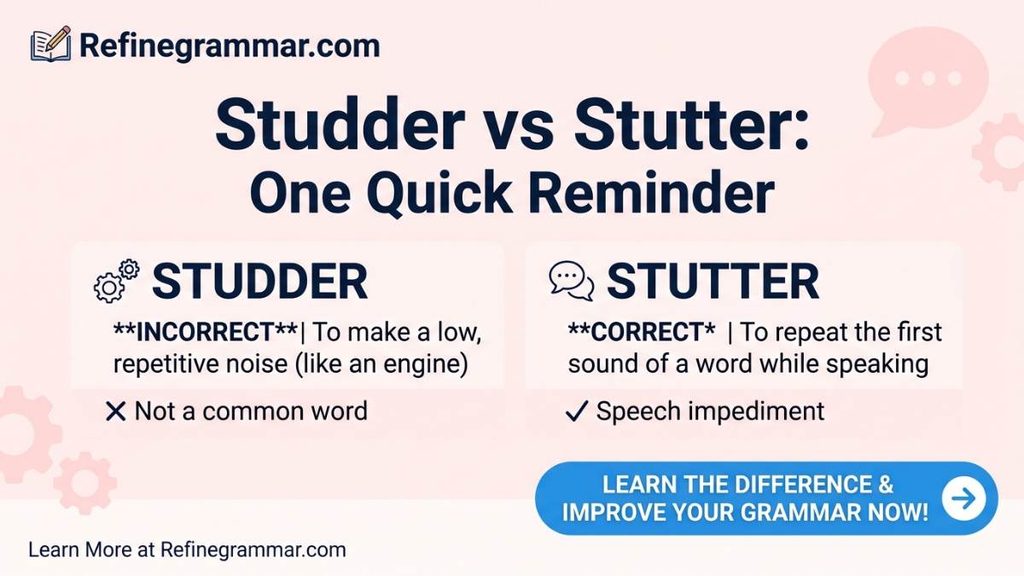
No matter which sentence structure you choose, the spelling rule never moves. Whenever you catch yourself weighing studder vs stutter mid-sentence, remember: stutter wins every single time.
Is Stuttering Normal?
Yes, especially in young children. Roughly 5 to 10 percent of kids stutter at some point, usually between ages two and six, and most outgrow it without treatment. Persistent stuttering into the school years is usually when specialists recommend a speech evaluation.
Judder vs Stutter
These two sound alike but describe different things entirely. Judder refers to uneven, jerky motion in video or film, caused by a frame rate that doesn’t divide evenly across a display’s refresh rate. Stutter, in a tech context, means a missing or delayed frame during playback a different flaw with a similar name.
The Science Behind Stuttering
Stuttering is now understood as a neurological condition, not a psychological flaw or a sign of nervousness. Brain-imaging research shows real differences in how speech-related regions coordinate timing and motor control in people who stutter.
Learn More: In Process vs In Progress: The Ultimate Grammar Guide
What Causes Stuttering?
Researchers point to a mix of contributing factors:
- Genetics stuttering often runs in families.
- Neurological differences the brain’s speech-timing circuits work differently.
- Developmental timing it commonly appears while language skills are rapidly expanding.
- Acquired triggers in rarer cases, a stroke or brain injury causes neurogenic stuttering later in life.
Can Stuttering Be Treated or Improved?
Yes. Speech therapy remains the most effective approach, teaching breathing control and slower, more deliberate speech patterns. Early intervention in childhood tends to produce the strongest results, though adults can still make meaningful progress with a qualified speech-language pathologist.
Does Stuttering John Really Stutter?
Yes. John Melendez, known as “Stuttering John” from The Howard Stern Show, has had a genuine stutter since childhood, and that’s exactly how he earned his on-air nickname. He later worked with a speech coach and went on to become the announcer on The Tonight Show with Jay Leno.
Stutter Master 2 vs Stutter Edit 2
Away from speech, “stutter” also names a music-production effect. Stutter Master 2 is a budget-friendly beat-repeater plugin popular for quick, glitchy loops, while iZotope’s Stutter Edit 2 is a premium, MIDI-driven tool built for live performance and complex rhythmic sound design. Producers choosing between the two usually weigh price against depth of control.
Common Writing Mistakes: Studder Instead of Stutter
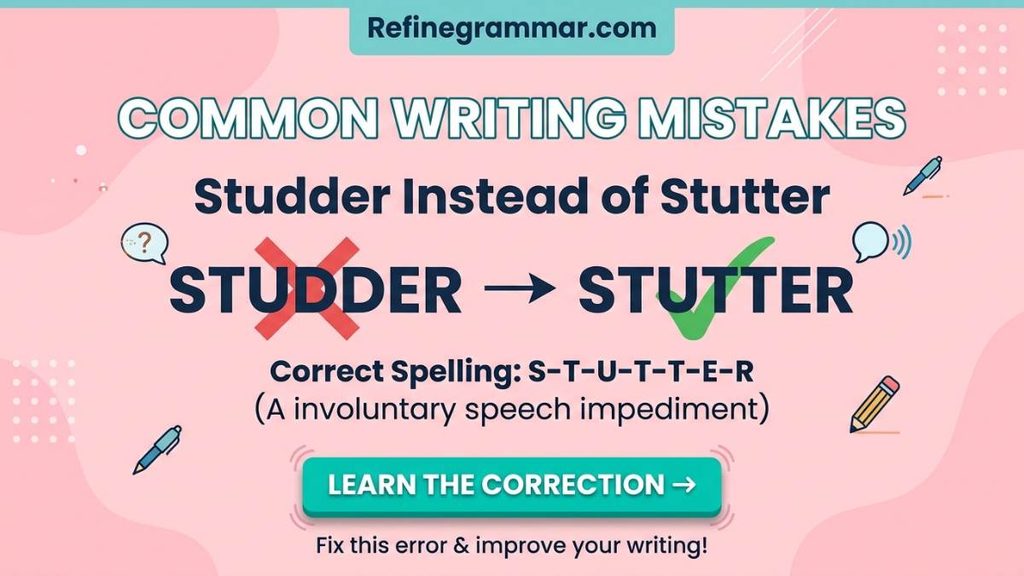
Writers slip up most often in casual emails, social captions, and quickly typed first drafts. That’s where the majority of studder vs stutter errors happen, and spell-checkers sometimes miss them because “studder” resembles a plausible surname so proofreading by eye still matters.
Why Correct Spelling Matters
A misspelled word can quietly undercut your credibility, especially in academic, medical, or professional writing about a sensitive topic like a speech disorder. Getting studder vs stutter right shows attention to detail and respect for the people the word describes.
Memory Trick to Remember Stutter
Picture the double T as two feet tripping over each other that stumble is exactly what a stutter sounds like. Or remember that stutter rhymes with butter and clutter, both spelled with a double T, never a D.
Practice Sessions: Studder vs Stutter
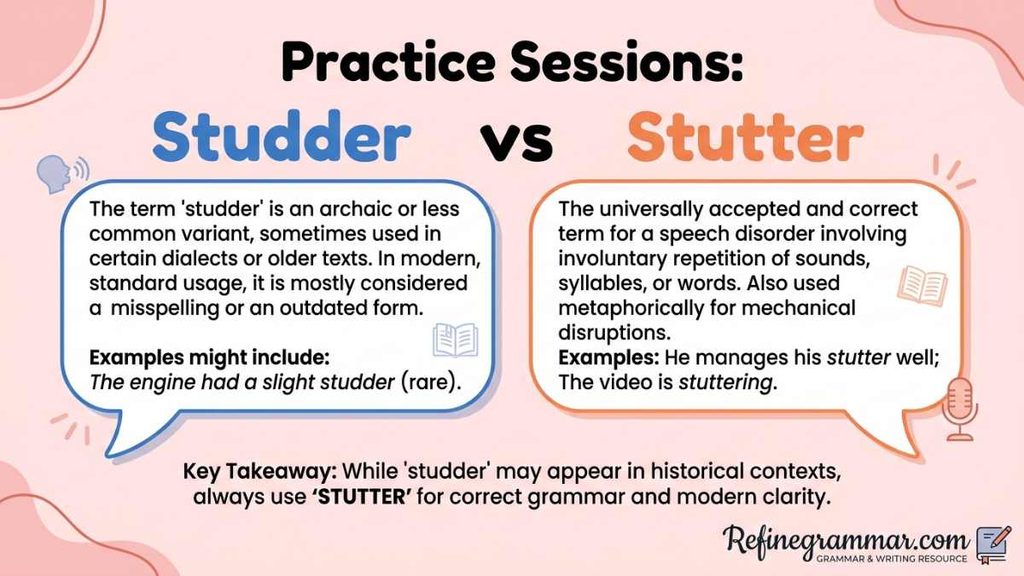
Test what you’ve learned with these short exercises.
Fill in the Blanks
- He tried to hide his ______ during the presentation. (stutter)
- The word ______ is not found in standard dictionaries. (studder)
Sentence Completion Practice
Complete this sentence correctly: “Her speech therapist helped reduce her ______ over six months.” (Answer: stutter)
Grammar and Meaning Check
Find the error: “He has a mild studder when he’s nervous.” (Correct: stutter)
Multiple Choice
Which spelling appears in Merriam-Webster as the speech disorder? a) Studder b) Stutter Answer: b) Stutter.
Advanced Understanding
Explain why “studder” persists in casual writing despite being incorrect. Hint: phonetic spelling and fast speech blur the double T into a D sound.
Bonus Challenge
Rewrite this sentence correctly: “She studders whenever she’s put on the spot.” Answer: “She stutters whenever she’s put on the spot.”
FAQs
What disability does Emily Blunt have?
Emily Blunt has a stutter that began in her childhood, and she now speaks publicly as an advocate for stuttering awareness.
What is the politically correct term for stuttering?
“Stuttering” or “having a stutter” are both accepted and respectful terms; avoid using “stammerer” as a blanket identity label.
What are the three types of stuttering?
Developmental, neurogenic, and psychogenic stuttering are the three recognized types, with developmental being by far the most common.
What does the word “studder” mean?
Outside a rare, old trade term for a watch-hairspring worker, “studder” has no standard meaning it’s simply a misspelling of stutter.
Is it “stutter” or “stammer” what’s the real difference?
Both describe the same condition; stutter is standard in American English, while stammer is preferred in British English.
Is stuttering normal, or a sign of a deeper issue?
It’s often a normal part of early childhood language development and usually resolves on its own without treatment.
What’s the difference between “judder” and “stutter”?
Judder is a steady, repeating motion flaw in video, while stutter is an irregular glitch from a dropped or delayed frame.
Does “stuttering” cover both stuttering and having a stutter, or are they different things?
They describe the same condition from two angles one as an action, one as a trait so they aren’t functionally different.
Does Stuttering John really stutter?
Yes, his stutter is genuine and lifelong, and it’s exactly how he earned his nickname on The Howard Stern Show.
Stutter Master 2 vs. Stutter Edit 2 how do these audio plugins compare?
Stutter Master 2 is simpler and cheaper for quick glitch effects, while Stutter Edit 2 offers deeper, MIDI-driven control for professional sound design.
Final Thought
Studder vs stutter isn’t really a close call stutter is correct, always. Keep that double T in mind, and you’ll never second-guess the spelling again. Whether you’re writing about speech, video, or music plugins, stutter is the word you need.
