
You are about to email your team about a possible Friday workshop. You type the phrase, then stop. Is it gauging or gaging? The Gauging Interest vs Gaging Interest question trips up students, marketers, and managers every week, because both spellings look believable on screen.
Here is the short version: write gauging. This guide explains why, shows the rare places where gaging is acceptable, and gives you a memory trick that makes the choice automatic.
Gauging Interest vs Gaging Interest: Which Is Correct?
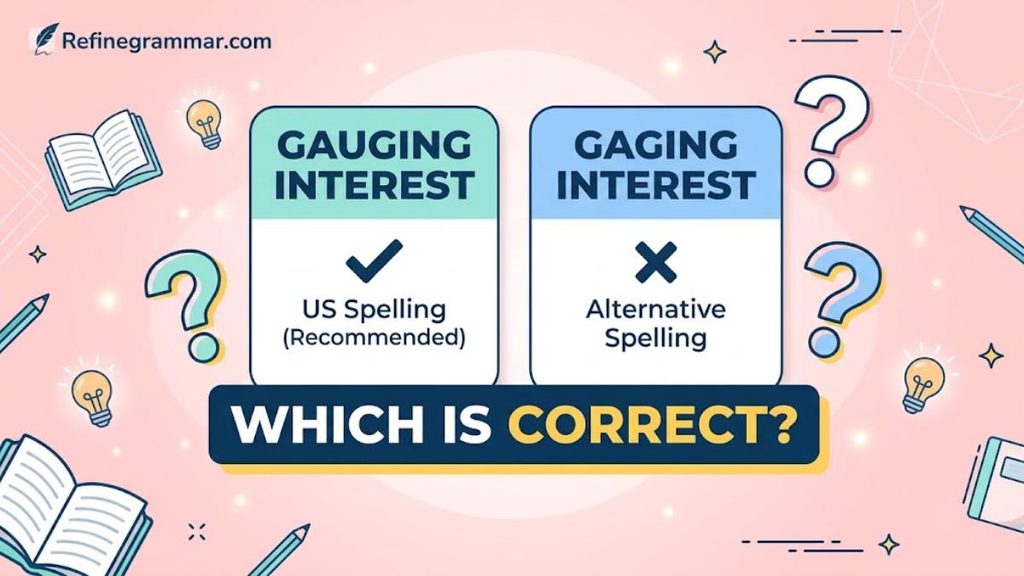
Gauging interest is the correct spelling when you mean measuring how much people care about something. Gaging interest is a rare variant that most readers will treat as a typo.
Dictionaries do record gage as a variant of gauge, so it is not an invented word. Still, in everyday US English, gauging is the form editors and readers expect. In the Gauging Interest vs Gaging Interest choice, gauging wins almost every time.
Quick Answer: Gauging Interest vs Gaging Interest
- Correct: gauging interest (the verb gauge plus -ing).
- Rare variant: gaging interest, found mostly in technical settings.
- Best for emails, reports, essays, and marketing copy: gauging interest.
Simple rule
If you are judging how people feel, spell it with a U: gauging. Use it for audiences, customers, and demand.
Understanding the Difference
The two spellings share a family tree, but they now do different jobs. Gauge is the everyday verb and noun for measuring or judging. Gage is a variant spelling that survives mainly in technical trades. It also has an old meaning: a pledge or a challenge.
That split explains why Gauging Interest vs Gaging Interest never fully disappears. One spelling is standard. The other is a specialist survivor.
Gauging Interest vs Gaging Interest: Comparison Table
| Feature | Gauging Interest | Gaging Interest |
| Status | Standard spelling | Rare variant |
| Everyday US English | Expected and natural | Looks like a typo |
| Formal writing | Safe choice | Best avoided |
| Typical setting | Business, school, marketing | Machining, inspection, older texts |
| Reader reaction | No pause at all | Confusion or doubt |
| Recommendation | Use it | Skip it for this phrase |
What Does “Gauging Interest” Mean?
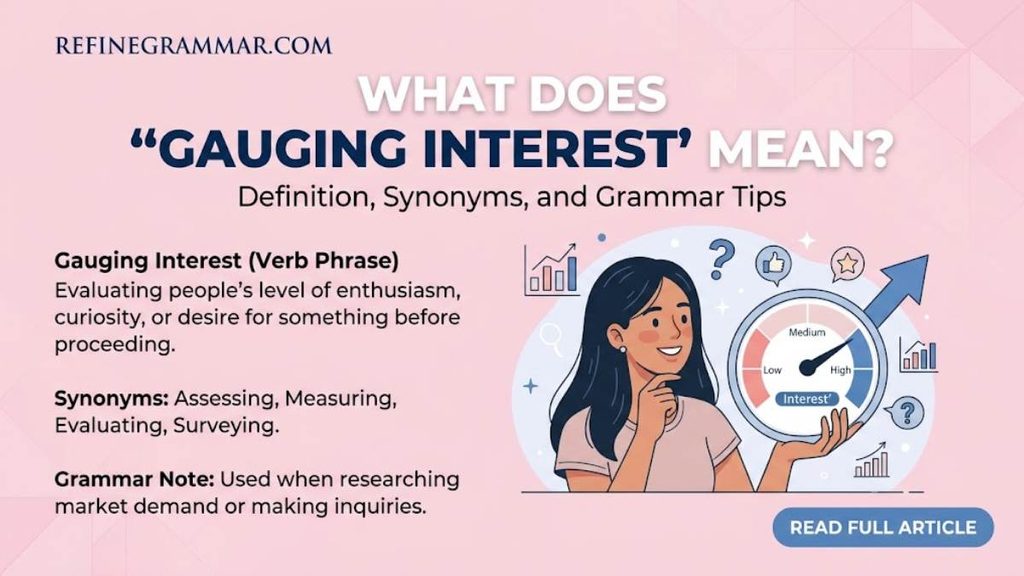
Gauging interest means finding out how curious, keen, or willing people are before you commit time, money, or effort. In plain terms, you are taking the temperature of your audience.
Sentence breakdown
Take this sentence: We are gauging interest in a weekend photography class.
- We: the subject.
- are gauging: the present continuous verb.
- interest: the thing being measured.
- in a weekend photography class: the topic people might care about.
Why “Gauging Interest” Is the Preferred Form
Three reasons make gauging the safe choice:
1. Dictionaries treat gauge as the main entry and gage as a variant.
2. Readers meet gauging in business writing, news, and research, so it looks right.
3. Search and spellcheck tools handle it smoothly.
Best choice for general US English
In Gauging Interest vs Gaging Interest, the general US English answer never changes: use gauging in emails, blog posts, school papers, and reports.
Why Is “Gauging” Spelled With an “I”?
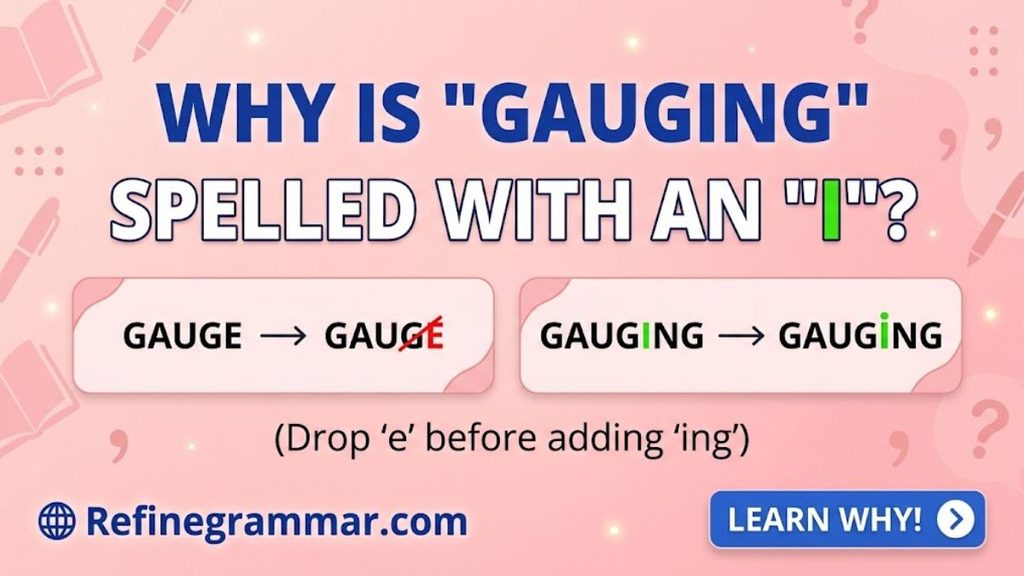
The I comes from the -ing ending. The base verb is gauge, which ends in a silent E. Drop that E, add -ing, and you get gauging. The A and U stay exactly where they were.
Is “Gaging Interest” Wrong?
In the Gauging Interest vs Gaging Interest debate, gaging is not always wrong, but it is almost always the weaker choice. Gaging is a real spelling in specific settings. Yet interest is something people feel, so gaging interest reads as a slip.
Think of it this way:
Gaging fits a machinist’s workshop. In a marketing email, it looks out of place.
Correct Uses of “Gauging Interest”
Gauging Interest in a Product
Before launching a new flavor, the brand polled loyal customers for gauging interest.
Gauging Interest in an Event
The club is gauging interest in a summer hiking weekend.
Gauging Interest in an Idea
She shared a short survey to gauge interest in her idea for a weekly podcast.
Gauging Interest in a Business Proposal
The founders are gauging interest from investors before they finalize the pitch.
Gauging Interest in a Class
Our local library is gauging interest in a beginner Spanish class this autumn.
“Gauge Interest” vs “Gauging Interest”
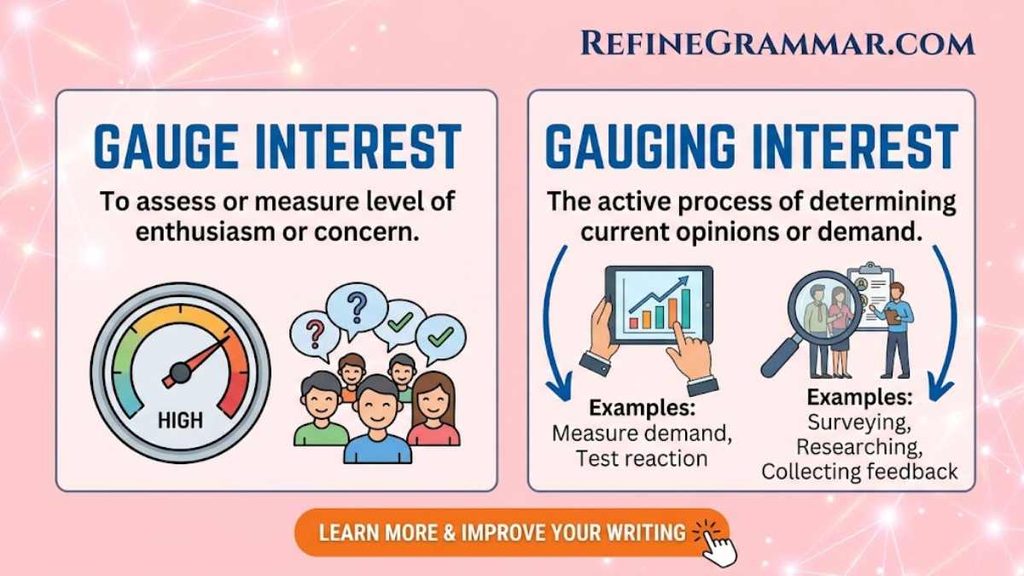
Gauge interest
Use the base form after to, will, can, and should. Example: We plan to gauge interest early.
Gauging interest
Use the -ing form after am, is, are, was, and were. Example: They are gauging interest right now.
Test Tip: How to Choose the Right Word
To settle Gauging Interest vs Gaging Interest fast, ask one question: am I measuring people’s reactions? If yes, use gauge or gauging.
Quick memory trick
You gauge your audience. Both words share the letters AU, so if an audience is involved, keep the U.
Real-Life Workplace Example
Subject: Quick poll on a team offsite
Hi team, before we book a venue, I am gauging interest in a one-day offsite next quarter. Please reply with a yes or no by Thursday.
Why not “gaging”?
A manager who writes gaging may look careless. Precise wording matters in status updates too, as our guide to in process vs in progress shows.
Grammar Explanation
Gauge is a regular verb: gauge, gauges, gauged, gauging. It means to measure or judge.
Why both forms can exist
English spelling settled slowly, and some trades kept older forms. American technical fields held on to gage, which is why manufacturing catalogs still use it.
Important distinction
A spelling can exist without fitting your sentence. Choose by context and audience, not by dictionary presence alone.
Common Mistakes With Gauging Interest
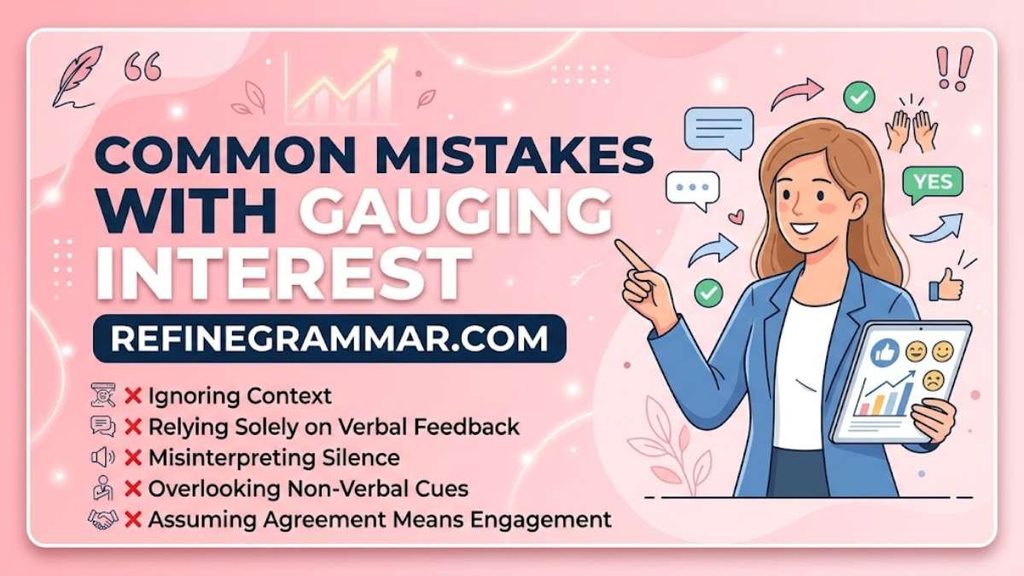
Mistake 1: Writing “Gaugeing”
Wrong: We are gaugeing interest. Right: We are gauging interest.
Mistake 2: Automatically Treating “Gaging” as the Standard Spelling
Because dictionaries list gage, some writers assume the two are equal. In everyday usage, they are not.
Mistake 3: Using “Gauge” After “Are”
Wrong: We are gauge interest. Right: We are gauging interest.
Mistake 4: Using “Gauging” After “To”
Wrong: We want to gauging interest. Right: We want to gauge interest.
Why These Mistakes Happen
Fast typing
Hurried fingers skip or swap letters.
Autocorrect
Gage is a real word, so spellcheck often stays silent.
Lack of familiarity
Many people hear the phrase more often than they see it written.
English spelling is inconsistent
The AU sound has many spellings, so guessing is tempting.
Similar English Confusions
If this topic helped, these related guides will too:
- Missing or swapped letters, such as lable or label.
- Dropped letters, as in comment vs coment.
- Near-miss spellings like emaculate vs immaculate.
- Frequent typing slips, including thier or their.
- Apostrophe trouble, such as parents vs parents.
Usage in Different Contexts
Everyday Conversation
Out loud, both spellings sound identical. The trouble begins only when you write them down.
Professional Writing
Stick with gauging interest in proposals, reports, and client emails. It keeps attention on your message.
Creative Writing
Fiction writers often use gauge figuratively, such as a character gauging a room’s mood. For more on figurative language, see simile vs metaphor.
Social Media and Texting
Choose gauging even in a quick caption, since public posts stay visible.
Gauging Interest vs. Measuring Interest
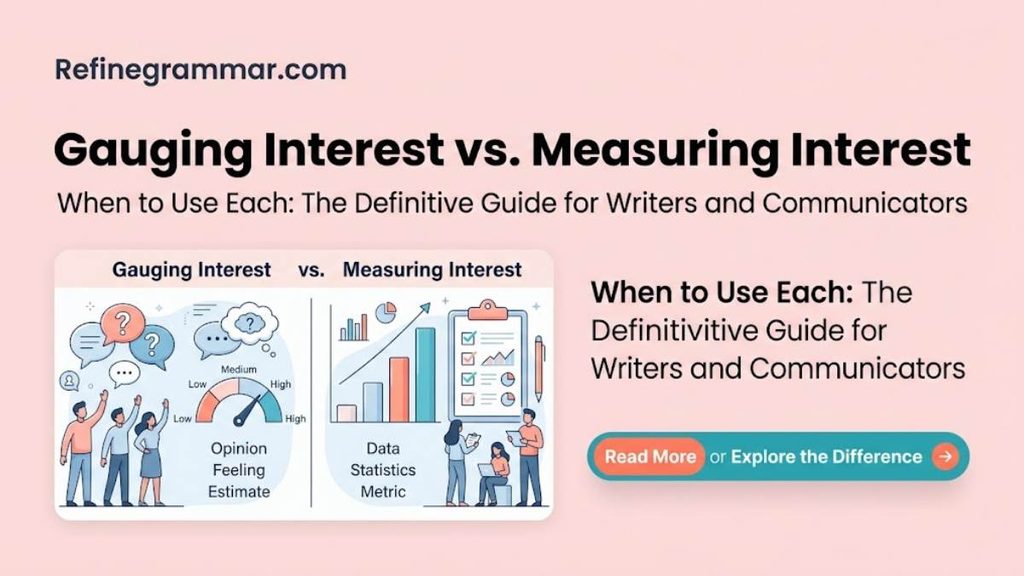
The two phrases overlap, but they are not identical.
- Gauging suggests judging from signals such as conversations, reactions, and body language.
- Measuring suggests hard numbers, such as a 42 percent survey response rate.
Gauging Interest in Business and Marketing

Smart teams test demand before spending budget, and they spell Gauging Interest vs Gaging Interest correctly in every survey invitation. Common methods include:
- Short surveys and polls
- Waitlists and sign-up pages
- Social media reactions and comments
Common business expressions
- Gauge demand
- Gauge market interest
- Test the waters
Why Correct Spelling Matters
Clarity
The right word lets readers move on without a second thought.
Professionalism
Getting Gauging Interest vs Gaging Interest right tells clients and colleagues that you pay attention to detail.
Reader confidence
One visible slip can make readers doubt the rest.
Digital communication
People search for the standard spelling, so using it helps your post get found.
Special Exception: When “Gaging” May Appear
In manufacturing and inspection, gage and gaging are standard terms, for example gage blocks or gaging systems. The name Gage also exists as a surname and a given name. Keep the spelling in those cases.
None of these uses involve measuring how interested people are, so they do not change the Gauging Interest vs Gaging Interest answer.
Tip: Gauging Interest vs Gaging Interest
Recommended primary focus keyword
gauging interest vs gaging interest
Secondary keyword
gauging interest meaning
Comparison keyword
gauge vs gage
Suggested image ALT text
Gauging interest vs gaging interest chart showing gauging as the correct spelling
Quick Recap Checklist
- In Gauging Interest vs Gaging Interest, choose gauging for people, audiences, and demand.
- Drop the silent E before adding -ing.
- Use gauge after to, and gauging after are.
Practice 1
Fill in the blank: We are ____ interest in a new fitness class. Answer: gauging.
Practice 2
Fix the sentence: We want to gauging interest. Answer: We want to gauge interest.
Practice 3
Which is correct in a marketing email: gauging or gaging? Answer: gauging.
Frequently Asked Questions (FAQs)
What is the difference between gauging interest vs gaging interest?
Gauging interest is the standard spelling. Gaging is a rare variant that most readers see as an error.
Is gaging interest ever acceptable?
Rarely. It fits technical fields and older texts, but not everyday writing about people.
What does gauging interest mean?
It means judging how much people care about an idea, product, or event.
Is gauge interest correct?
Yes, after to, will, or can. Use gauging after am, is, or are.
Conclusion
The Gauging Interest vs Gaging Interest debate has a clear winner. Gauging interest is the standard, reader-friendly spelling for measuring how people feel. Gaging belongs to workshops, catalogs, and old texts.
