
If you’ve ever paused mid-sentence wondering whether to write “stopping” or “stoping,” you’re not alone. This exact spelling question trips up students, bloggers, and even professional writers, because the two words are separated by a single letter but mean entirely different things. Understanding stopping or stoping correctly matters not just for grammar accuracy, but for clarity using the wrong one in a formal document, resume, or article can confuse readers or make your writing look careless. This complete guide covers the meaning, origin, grammar rules, and real-world usage of stopping or stoping, so you can spell it right every single time.
Stopping
Stopping is the correct spelling of the present participle and gerund form of the verb “stop.” It describes the act of coming to a halt, pausing an action, or ceasing movement. You’ll see it everywhere from traffic signs to instruction manuals because it’s one of the most common ing verbs in everyday English.
Stoping
Stoping is a specialized term used almost exclusively in mining engineering and geology. It refers to the underground process of removing ore from a vein, which leaves behind an open cavity known as a “stope.” Outside of technical mining literature, you’ll rarely encounter this word.
Stopping or Stoping: Quick Answer
Here’s the short version: stopping is correct for everyday English, while stoping is a niche mining term. If you’re writing about pausing, halting, or ending an action, always choose stopping. Save stoping for geology reports, engineering papers, or discussions of underground mining methods.
- Stopping general usage (halting, pausing, ceasing)
- Stoping technical usage (ore extraction in mining)
- The vast majority of writers will only ever need “stopping”
This is the fastest way to settle the stopping or stoping debate before diving into the details below.
The Origin of Stopping
The word “stop” comes from the Old English “stoppian,” meaning to plug or block up, which itself traces back to Late Latin “stuppare” to stuff with tow or fiber. Over centuries, the meaning broadened from physically blocking something to the general sense of halting motion or activity.
When English speakers add “-ing” to short verbs like stop, spelling rules kick in. Similar confusion appears elsewhere in English, like knowing whether a word should be maintained or maintenanced, which follows its own unique formation pattern. Recognizing these patterns early helps you avoid the same trap that creates the stopping or stoping mix-up.
British English vs American English Spelling
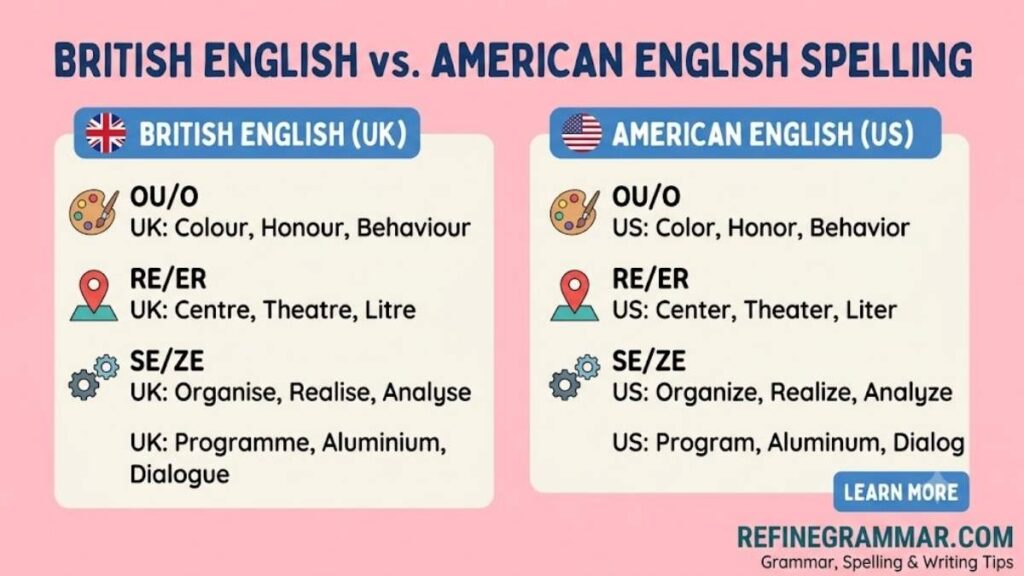
Unlike words such as “colour/color” or “travelling/traveling,” stopping does not change between British and American English. Both spelling systems agree: it’s always stopping, never stoping, when referring to halting an action.
| Region | Spelling | Example |
| British English | Stopping | The train is stopping at the platform. |
| American English | Stopping | The car is stopping at the light. |
No dialect anywhere in the English-speaking world accepts “stoping” as an alternate spelling of stopping the words are entirely unrelated in origin and meaning.
Which Spelling Should You Use?
Choosing between stopping or stoping comes down to context:
- Writing an email, essay, article, or everyday sentence? Use stopping.
- Writing a geology thesis, mining report, or engineering document? Use stoping only if you specifically mean ore extraction.
If you’re unsure, ask yourself: am I talking about ending an action, or about digging out minerals underground? The answer instantly tells you which spelling fits. For more on getting tricky spellings right the first time, see how to correctly use refer or reffer, which follows a similar consonant-doubling logic.
refer or reffer
Looking for alternatives to keep your writing varied? Here are common synonyms for stopping:
- Halting
- Pausing
- Ceasing
- Ending
- Braking
- Discontinuing
- Quitting
- Interrupting
- Concluding
- Blocking
None of these synonyms apply to stoping, since stoping isn’t interchangeable with any general-purpose word it’s a fixed technical term.
How to Spell “Stopping” Correctly (Common Questions)
Why do we double the “p”?
English follows the CVC rule (Consonant-Vowel-Consonant) for short verbs. Stop ends in a single vowel followed by a single consonant (o-p), and it’s a one-syllable word, so the final consonant doubles before adding a suffix that starts with a vowel. That’s why we write stopping, not “stoping.” The same doubling logic explains why referring doubles its final consonant, as covered in our guide to refer or reffer. This is a key part of mastering stopping or stoping grammar rules.
What about “stopped”?
The same doubling rule applies to the past tense: stop becomes stopped, not “stoped.” Whether you’re writing stopping, stopped, or stops, the base spelling of “stop” never loses its double p in these forms. This consistency is one more reason the stopping or stoping confusion is easy to clear up once you know the rule.
Common Mistakes with Stopping
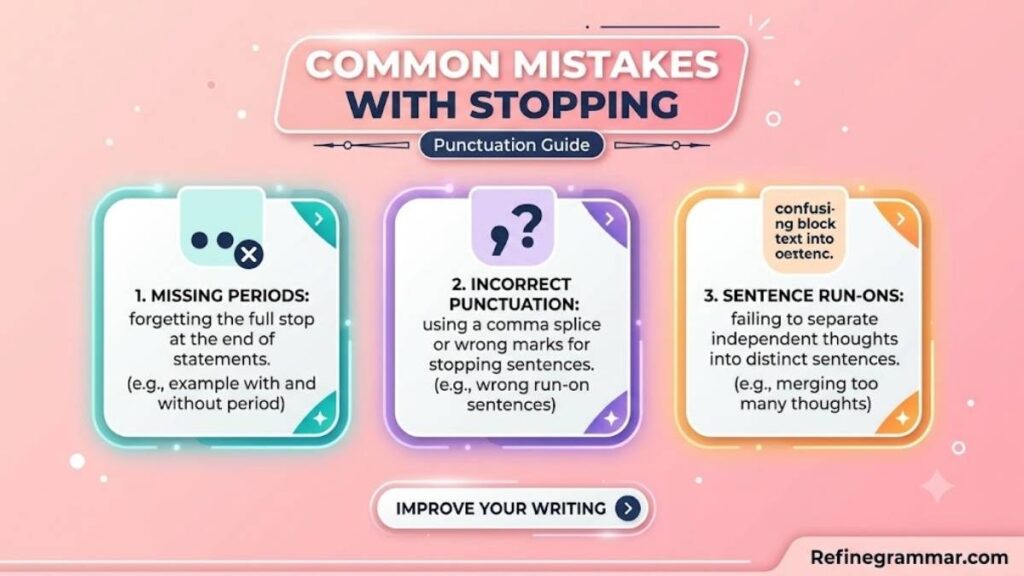
Even confident writers slip up. Common mistakes include:
- Typing “stoping” when you mean stopping a simple typo that changes the word’s meaning entirely
- Forgetting to double the p and writing “stoping” instead of stopping
- Using stoping outside of mining or geology contexts
- Mixing up stopping with other commonly confused word pairs, such as protestors or protesters, which also trips up writers due to similar-looking word endings
Avoiding these errors is simple once you remember: stopping or stoping isn’t really a 50/50 choice stopping wins in nearly every situation.
Stopping in a Sentence
- The bus is stopping at the next station.
- She kept stopping to check her phone during the meeting.
- Heavy rain is stopping the outdoor concert.
- Officials announced new rules for stopping illegal parking.
- The company is stopping production for maintenance next week.
- He’s stopping by the office before heading home.
Stopping in Everyday Examples
Beyond simple sentences, stopping shows up in many compound phrases:
- Stopping distance how far a vehicle travels before coming to a complete stop
- Stopping power how effectively brakes (or, informally, other forces) bring something to a halt
- Stopping point a designated place or moment where something ends
Each of these phrases relies on the standard spelling never “stoping” because they all describe the everyday concept of halting, not the mining process. Recognizing these patterns reinforces the stopping or stoping rule in practical, real-world writing.
Stopping or Stoping Grammar Rules
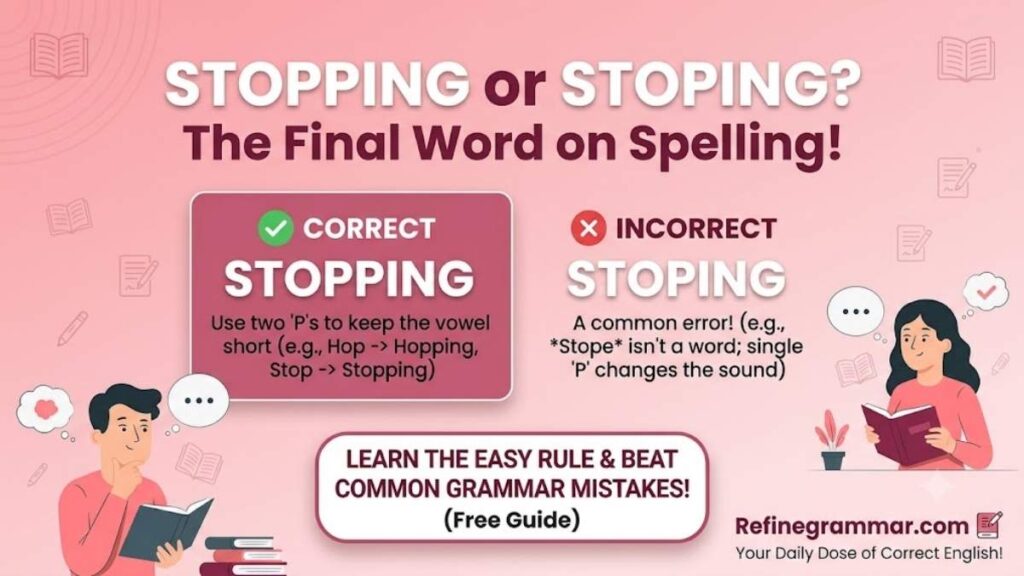
To summarize the grammar behind stopping or stoping:
1. Identify the base verb: stop.
2. Check the syllable pattern: one syllable, ending in consonant-vowel-consonant.
3. Double the final consonant: stop → stopp-.
4. Add the suffix: stopp + ing = stopping.
This same four-step process applies to many short English verbs, though not every word behaves identically number-related spelling questions like 31st or 31th follow entirely different rules around ordinal suffixes, which shows why English spelling rewards close attention rather than memorized shortcuts.
Stopping: Google Trends & Usage Data
Search data consistently shows that “stopping” is used far more often than “stoping,” which makes sense, since stopping belongs to everyday vocabulary while stoping is confined to a specialist field. Many searches for stopping or stoping actually come from people who aren’t sure how to spell “stopping” and stumble across “stoping” by accident, often because of a missed keystroke or a mining article appearing in search results. This is similar to how searches for fourteen or forteen spike among people unsure about basic number spelling both cases stem from small, easily corrected mistakes rather than genuine grammatical ambiguity.
Keyword Variations Comparison Table
| Search Variation | Correct Form | Notes |
| “stoping or stopping” | Stopping | Common reversed search query |
| “stopping vs stoping” | Stopping | Comparison-style search |
| “is it stoping or stopping” | Stopping | Question-based search |
| “stoping meaning” | Stoping (mining) | Only valid in a geology or mining context |
| “stopping meaning” | Stopping | Standard, everyday usage |
| “stopping synonym” | Stopping | See the synonyms section above |
Stopping vs Stoping: Spelling Rules and Meaning
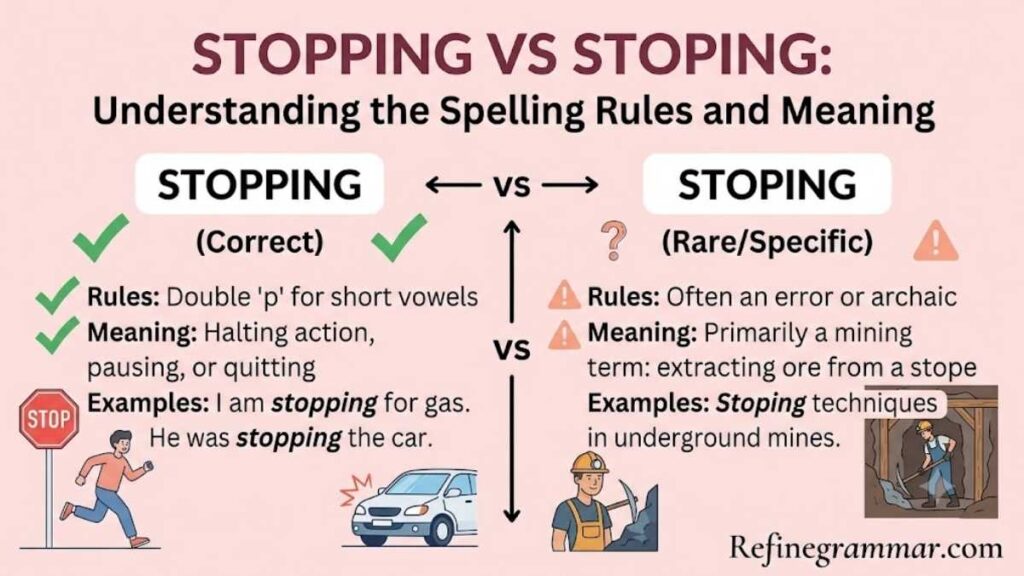
Let’s break the stopping or stoping comparison down one more time for absolute clarity.
Correct usage:
Use stopping whenever you’re describing an action coming to an end. Use stoping only when discussing ore extraction in mining.
Key difference:
The core difference is context: stopping is a general-purpose verb form, while stoping is an industry-specific term tied to mining engineering. They are not interchangeable, and one is not simply a variant spelling of the other.
Common search variations explained:
People searching “stopping or stoping” are typically checking a spelling, not comparing two equally valid options. In nearly every case, the searcher actually wants “stopping.”
Related verb forms (important for clarity)
Related forms of stop include stops, stopped, and stopping — all of which double the p. For a closer look at how similar noun pairs can create confusion, check out our comparison of protestors and protesters, and if you’re mixing up sound-alike phrases elsewhere in your writing, our guide on bear with me vs bare with me covers another frequent slip-up.
FAQs About Stopping or Stoping
Which is correct: stopping or stoping?
Stopping is correct for everyday English. Stoping is only correct in mining and geology contexts.
What does “stopping” mean?
Stopping means coming to a halt, pausing, or ceasing an action or movement.
What does “stoping” mean?
Stoping is a mining term for extracting ore underground, leaving behind an open space called a stope.
How do you spell stoping?
It’s spelled S-T-O-P-I-N-G, with a single p but it’s only correct in mining contexts, not as a substitute for stopping.
What is another word for stopping?
Common synonyms include halting, pausing, ceasing, and ending.
What is the difference between stop and stopping?
Stop is the base verb; stopping is its present participle or gerund form, used for ongoing or continuous actions.
How do you use stopping in a sentence?
For example: “The train is stopping at every station this morning.”
What does stopping off mean?
Stopping off means pausing briefly at a place during a longer journey.
What does a stopping point mean?
A stopping point is a designated place or moment where an action, journey, or process comes to an end.
What is the past tense of stop in a sentence?
The past tense is “stopped,” as in: “She stopped the car at the red light.”
Conclusion
The stopping or stoping debate has a clear, simple answer: stopping is the correct spelling for describing pauses, halts, and endings, while stoping remains a narrow technical term reserved for mining and geology. By understanding the CVC doubling rule, reviewing real-world examples, and recognizing common search variations, you’ll never second-guess the spelling of stopping or stoping again. Keep this guide handy any time you need a quick, reliable answer
