
Typed a sentence, paused, and wondered whether it should read business or buisness? You are far from alone. This exact spelling question sends thousands of people to search engines every day, and it almost always comes down to two letters swapping places at the worst possible moment: an email, a resume, or a client proposal.
This guide settles the business or buisness debate for good. You’ll learn the correct spelling, the history behind it, why the mix-up happens so often, and simple memory tricks that make it stick. Along the way, we’ll also flag a few other frequently confused word pairs, like whether the right choice is timeframe or time frame, since spelling slip-ups rarely travel alone.
Buisness or Business: Which One Is Correct?
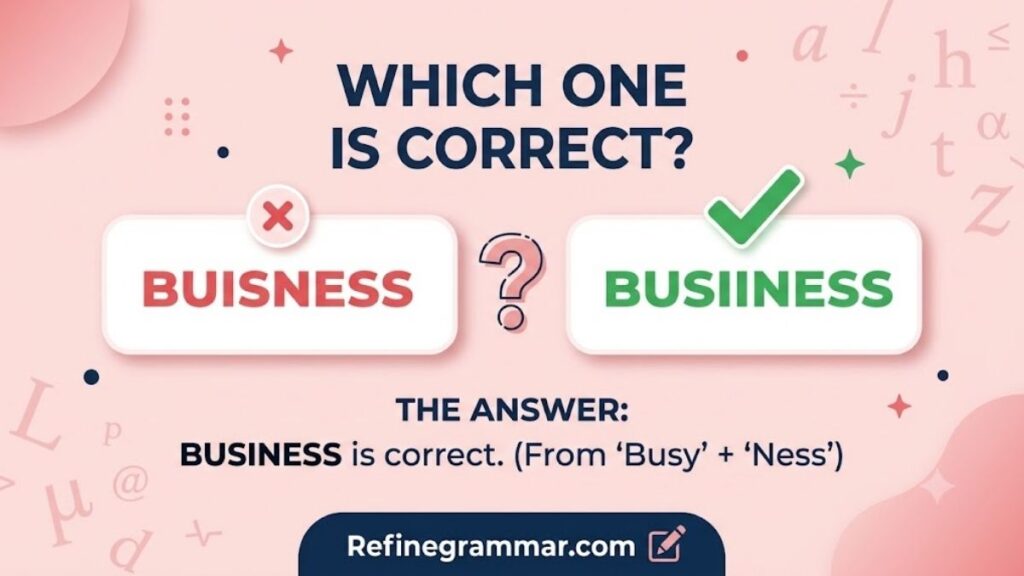
When people search business or buisness, they’re usually hoping for a quick, definitive answer, and here it is: business is correct. “Buisness” is not a regional variant, an old form, or an acceptable alternative — it is simply a misspelling, and a very common one. Whether you’re writing for a US audience, a UK audience, or an international one, business is the only correct choice.
Why “business” is correct
The confusion comes down to letter order: business is spelled with u before i (b-u-s-i-n-e-s-s), not i before u. The word’s root is “busy,” and remembering that connection is one of the fastest ways to lock in the right sequence. Every major dictionary, style guide, and grammar authority agrees there is no dispute here, which makes business or buisness one of the easier spelling questions to resolve once you know the trick.
Why People Confuse Buisness or Business
If correct spelling were only about knowing the rule, business or buisness wouldn’t be one of the internet’s most-searched grammar questions. The mix-up happens for a few very human reasons.
1. Pronunciation Differences
The word business is pronounced “BIZ-nis,” and the way it sounds gives very little indication of how it’s actually spelled. The silent-ish middle syllable makes it tempting to write the letters in the order they seem to sound, which is exactly how buisness sneaks in.
2. Typing Habits
Fast typing and muscle memory play a big role too. It’s the same reason people accidentally write misclick or missclick, or pause over convertor or converter the fingers move faster than the brain can double-check letter order, and business, with its unusual sequence, is an easy target.
3. Lack of Practice
Words we rarely write by hand tend to stay shaky in memory. The same pattern shows up with stopping or stoping, where uncertainty about doubling a consonant leads to repeated mistakes. Without regular practice, the correct order of business simply doesn’t get reinforced.
Business or Buisness: The Mandela Effect Explained
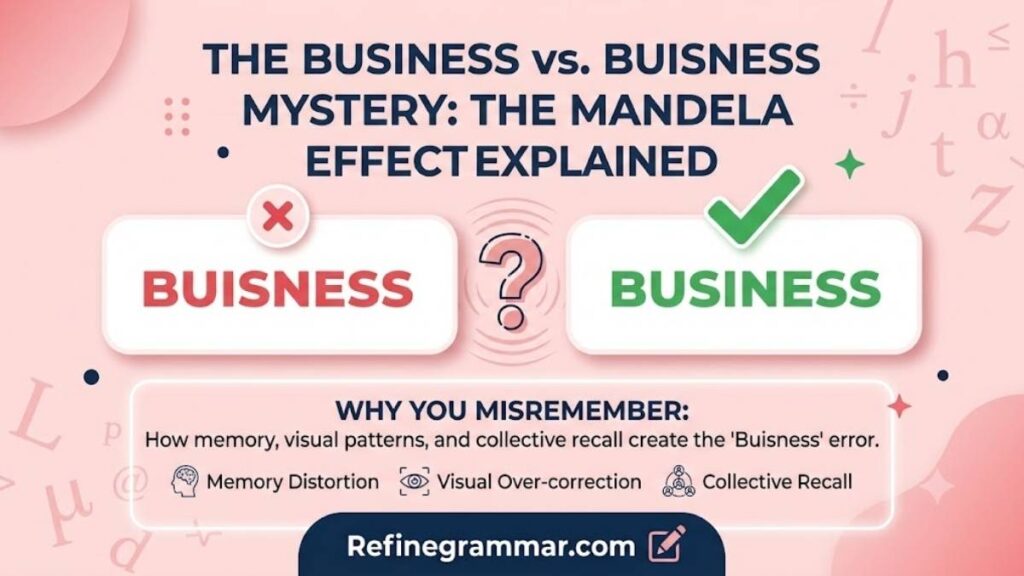
Some readers describe a strange feeling that they “remember” buisness being correct at some point. This isn’t evidence of a spelling change it’s a version of the Mandela effect, where a mistake becomes so visually familiar (thanks to typos in emails, social posts, and search bars) that it starts to feel plausible. The same false-familiarity effect shows up with searches like atleast or at least, where the incorrect form is so common online that people start to doubt the rule they actually learned in school. Business has never officially been spelled buisness in modern standard English; the feeling of familiarity comes from exposure to the error, not from any real historical spelling.
What Does Business Actually Mean?
Once the business or buisness question is settled, it’s worth knowing exactly what the word means. Business is a noun with several related meanings, all connected to work, trade, and commercial activity:
- A commercial organization or company “She started a small business last year.”
- Trade, commerce, or economic activity in general “Business has been slow this quarter.”
- One’s occupation, profession, or regular work “Accounting is his business.”
- A matter, affair, or personal concern”That’s none of your business.”
Business Spelling: American English vs British English
Unlike many words that shift between US and UK English (color/colour, organize/organise), business or buisness isn’t a transatlantic debate at all both varieties of English use the identical spelling.
| Variant | Spelling | Notes |
| American English | business | Standard in all US dictionaries and style guides |
| British English | business | Identical spelling; no regional alternative |
| Common misspelling | buisness | Not accepted in any English-speaking region |
Business vs Busyness: What’s the Difference?
Business and busyness look related and historically, they are but they mean different things today and should not be swapped.
| Word | Meaning | Example |
| Business | Commercial activity, a company, or one’s occupation | He runs a landscaping business. |
| Busyness | The state of being busy or having a full schedule | Her busyness left no time for lunch. |
A simple test: if you can replace the word with “company,” “trade,” or “occupation,” you need business. If you can replace it with “being busy” or “a hectic schedule,” you need busyness. This distinction is separate from the business or buisness spelling issue, but the two questions often get asked together.
Is “Businesses” the Correct Plural of Business?
Yes. The plural of business is businesses. Because the singular noun ends in -ss, English adds -es rather than just -s, giving you businesses, not “business’s” or “buisnesses.” For example: “Several local businesses closed during the renovation.” Getting business or buisness right in the singular makes the plural form easy to build correctly, too.
Importance of Correct Spelling in Business Communication
Getting business or buisness right matters more than it might seem, especially in professional settings where writing quality is often read as a stand-in for competence. A single misspelling of such a common word can stand out far more than a typo in a less familiar term.
Why spelling matters
A misspelled word in a resume, proposal, or client email can quietly undercut your credibility before anyone reads the actual content. Recruiters and clients often treat spelling as a proxy for attention to detail. Casual habits like swapping favs or faves in a text message are harmless in personal chats, but the same shortcuts in formal writing can cost you trust. Spelling business correctly is a small thing that signals a larger habit of care.
Easy Tips to Remember “Business”
1. Break It Down
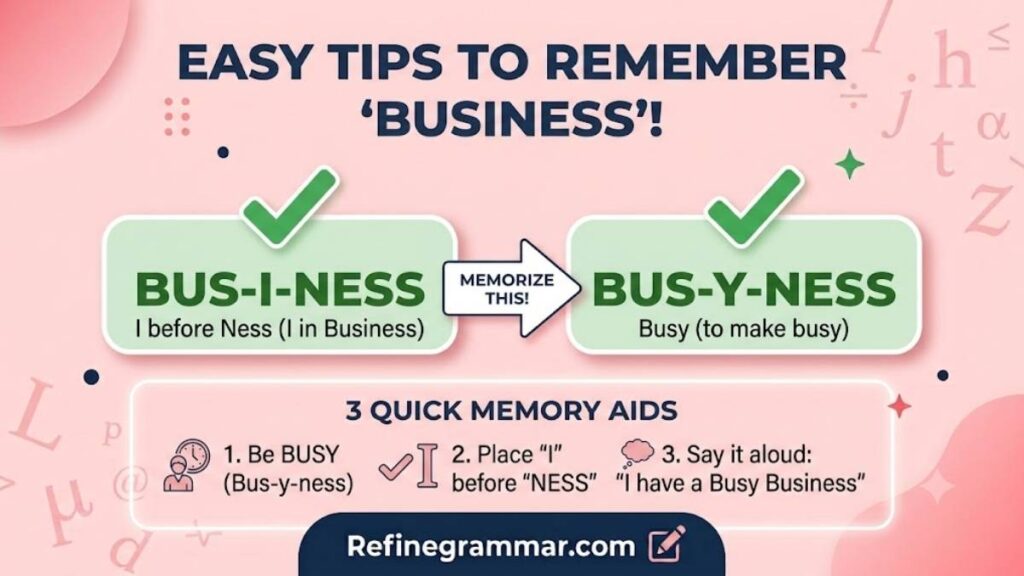
Split the word into three parts: BUS + I + NESS. “Bus” is spelled exactly like the vehicle, which makes the first syllable easy to anchor. Add “i,” then “ness,” and you have the full word in the correct order a quick way to settle business or buisness in your head before you type.
2. Link It to “Busy”
Business comes from “busy.” If you can spell busy correctly, you already have the first four letters of business locked in just add “ness” at the end.
3. Repeat and Practice
Write the word out a few times in full sentences until it feels automatic. The same repetition strategy helps with other tricky spellings, including whether something is laid out or layed out practice, not memorization of a rule alone, is what makes correct spelling stick long-term.
Common Examples of Business Usage
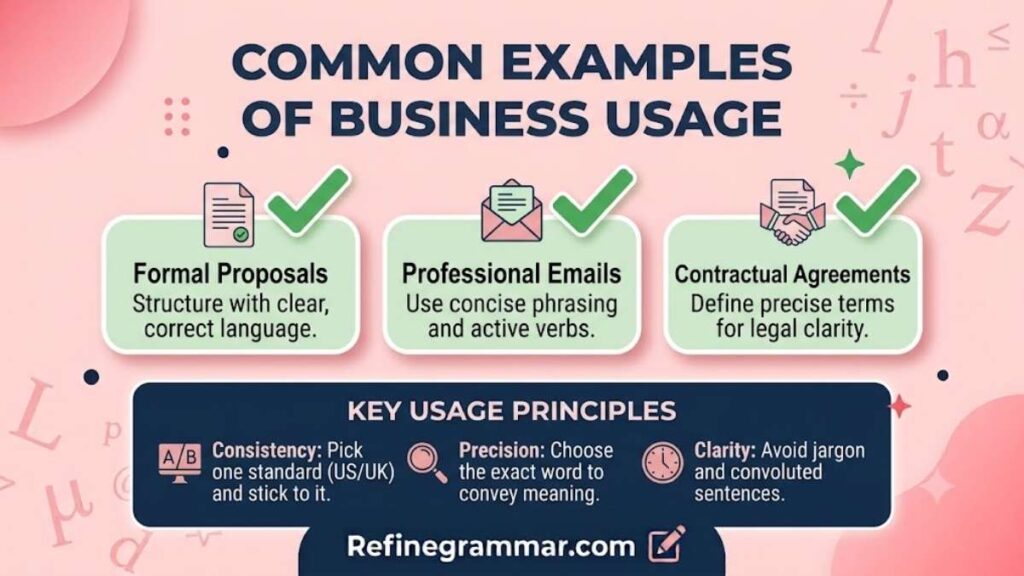
- She’s launching a new business next spring.
- Business has picked up since the new website went live.
- He’s away on business until Thursday.
- It’s not personal, it’s just business.
- Their family business has run for three generations.
Business Casual, Business Profile & Other Common Business Terms
Once business or buisness is no longer a question in your mind, the word shows up naturally in dozens of everyday phrases, and each one carries its own expectations:
- Business casual a dress code that’s polished but not formal, such as slacks and a collared shirt.
- Business profile a summary of a company’s mission, services, and background, often used on LinkedIn or a website.
- Business plan a written document outlining goals, strategy, and financial projections.
- Business hours the times a company is officially open for operations.
- Business card a small printed card with contact and company details.
Just as it’s easy to mix up to small or too small in everyday writing, business terminology has its own set of easy-to-confuse phrases so a little extra attention goes a long way in professional documents.
FAQs About Buisness or Business
What is the correct way to spell business?
The correct spelling is business b-u-s-i-n-e-s-s, with u before i.
Was business ever spelled buisness?
No. Business evolved from Old English and Middle English forms into its current spelling by the 17th century; buisness was never a standard form.
Which is correct, bussiness or business?
Business is correct. Bussiness, with a doubled s in the wrong place, is also a common misspelling.
Are there two ways to spell business?
No. There is only one accepted spelling business in both American and British English.
Is “businesses” the correct spelling?
Yes, businesses is the correct plural form of business.
Which is correct, busyness or business?
Both are real words with different meanings: busyness means being busy, while business refers to commerce, a company, or an occupation.
Does the word “busyness” exist?
Yes, busyness is a valid English word meaning the state of being busy or having a full schedule.
Is business plural with an apostrophe?
No. The plural is businesses, with no apostrophe. An apostrophe (business’s) shows possession, not plurality.
How do you say “very busy” in a professional way?
Phrases like “currently at capacity,” “juggling several priorities,” or “fully booked this week” sound more professional than simply saying you’re busy.
Is “business or buisness” a Mandela effect?
It’s often described that way, but it’s really a false-familiarity effect caused by how often the misspelling appears online — business has never officially been spelled buisness.
Conclusion
The business or buisness question has a simple, permanent answer: business is correct, and buisness is a misspelling, no matter the context or audience. Understanding the word’s roots in “busy,” practicing the u-before-i order, and proofreading before you hit send are enough to put this mix-up behind you for good. If this guide helped, you might also want to check whether it’s focusses or focuses next another small spelling detail that’s worth getting right.
