
Ever typed “class of 26” and felt something was missing? It was. The correct form is ’26, with an apostrophe in front. That tiny mark stands in for the missing ’26 or 26 means 2026. Leave it out, and the number looks random instead of like a year. Below, you’ll learn when to use each form, how to avoid the backwards apostrophe, and what the major style guides say.
Understanding the Difference at a Glance
Confused about ’26 versus 26? Context decides. A plain 26 is just a number. It can be an age, a count, or an item number. But ’26, with the apostrophe, is short for a year like 2026. The apostrophe replaces the missing “20,” just like the apostrophe in “don’t” replaces the “o” in “do not.”
Quick examples
| Sentence | Correct Form | Why |
| She turned 26 last week. | 26 | Refers to an age (a number) |
| Save the date for prom ’26. | ’26 | Shortened form of 2026 |
| I ran 26 miles this weekend. | 26 | Refers to a quantity |
| Our team is graduating in the class of ’26. | ’26 | Shortened form of a year |
When to Use the Plain Number
Answering is it 26 or 26 for everyday counting is usually the easier half of the question.
Common situations where the plain number is correct
The plain number 26, without any punctuation, is correct whenever you’re counting something rather than naming a year. That includes:
- Ages (“he just turned 26”)
- Quantities (“we ordered 26 units”)
- List or ranking positions (“item 26 on the list”)
- Room, page, or house numbers (“meet me in room 26”)
- Percentages or scores (“the team scored 26 points”)
A simple rule
If you could replace the number with a full word like “twenty-six” and the sentence still makes sense on its own, you almost certainly need the plain number, not the apostrophe form.
When to Use the Apostrophe Form
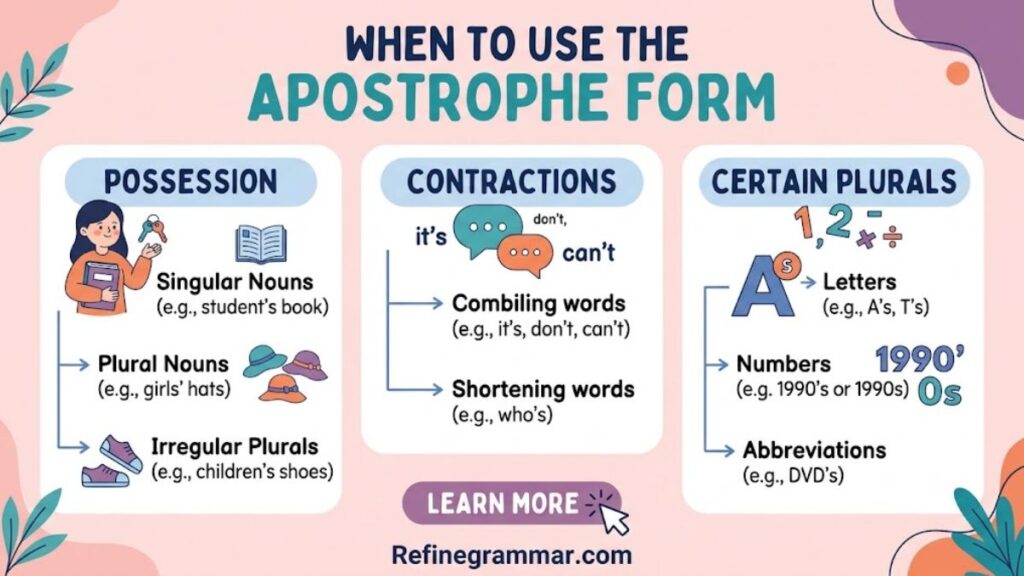
This is where most is it 26 or 26 confusion happens, since the shortened year looks small enough to feel optional.
Common examples of shortened years
The apostrophe form ’26 shows up whenever a year has been shortened for style, space, or casual tone. You’ll see it most often in:
- Graduation and class references (“Class of ’26”)
- Fiscal or academic year shorthand (“FY ’26” or “school year ’25–’26”)
- Casual references to the current or upcoming year (“see you in ’26”)
- Nostalgic references to a past year ending in 26, like 1926
Why the Apostrophe Is There
The apostrophe isn’t decorative. Its job is grammatical: it marks omission, meaning it stands in for letters or numbers that have been left out. When you write ’26 instead of 2026, the mark tells the reader “part of this number is missing, and I expect you to fill in the century.” Leaving the apostrophe out writing just 26 to mean a year removes that signal, and the reader is left guessing whether you meant a year or a quantity.
The Most Important Question: Are You Writing a Year or a Number?
Before you type anything, pause and ask yourself the one question that solves almost every case of is it 26 or 26: am I talking about a year, or am I talking about a quantity?
Think of it this way:
- If the number could stand for an age, a score, or a count, skip the apostrophe.
- If the number is standing in for a full four-digit year, add the apostrophe before it.
Formal Writing vs Informal Writing
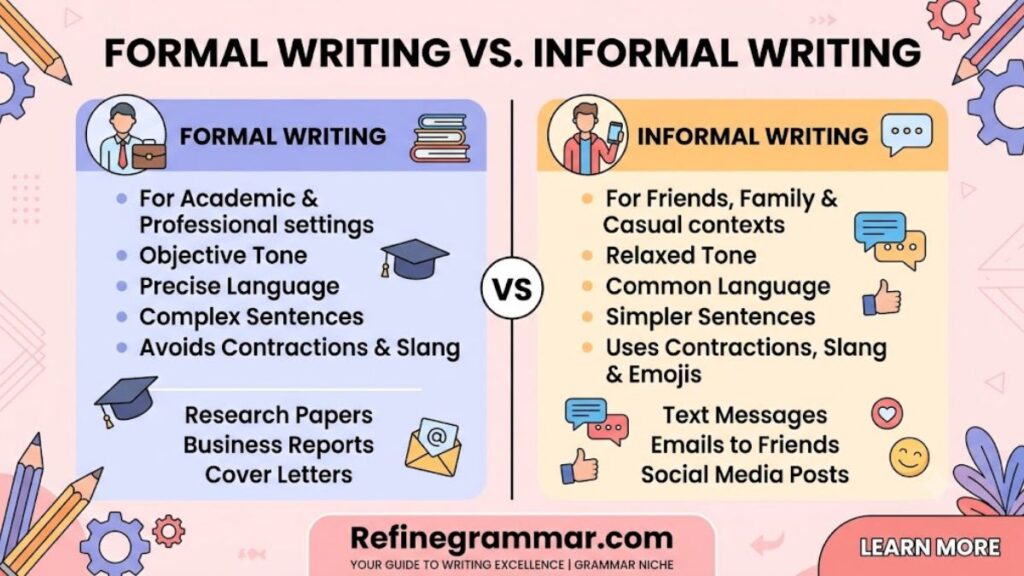
Grammatical correctness is only half the story. The other half is tone. Even when ’26 is technically acceptable, it isn’t always the best stylistic choice for the setting you’re writing in.
In formal writing, use the full year when possible

Academic papers, legal documents, business reports, and professional emails all benefit from spelling out the complete year. It removes any chance of ambiguity and reads as more authoritative.
Better formal examples
- The audit covers the fiscal year 2026, not the fiscal year ’26.
- The meeting is scheduled for March 2026, not March ’26.
- The dataset was collected between 1926 and 2026.
In casual or stylistic writing, the shortened form is often fine
Social captions, branding, merchandise, invitations, and informal messages are far more forgiving. In these settings, ’26 often reads as cleaner and more on-trend than the full 2026.
Examples
- “New Year, new me bring on ’26!”
- “Senior year ’26 hits different.”
- “Save the date: wedding ’26.”
Common Mistakes Writers Make
Most is it 26 or 26 mix-ups fall into one of the four patterns below.
1. Using an apostrophe for a regular number
Writing “she is ’26 years old” is incorrect, because age is a quantity, not a year reference. This is one of the most common slip-ups people make while typing quickly, not unlike mixing up similar-looking word pairs such as convertor and converter simply out of habit.
2. Using a shortened year in a context that needs clarity
A legal contract or an academic citation should never rely on ’26 alone, since a shortened year can be misread across decades or centuries.
3. Assuming the apostrophe always looks better
Some writers add an apostrophe purely for style, even when the number isn’t a year at all. This is similar to over-correcting spelling in other cases, such as second-guessing whether it’s atleast or at least the “cleaner-looking” version isn’t always the grammatically correct one.
4. Forgetting that shortened years depend on context
Without surrounding context, ’26 could theoretically mean 1926, 2026, or any other century ending in 26. Always make sure nearby words make the century obvious.
Examples in Real-Life Contexts

Seeing is it 26 or 26 applied across different settings makes the rule easier to remember.
Age
Correct: “My cousin just turned 26.”
Incorrect: “My cousin just turned ’26.”
Calendar year
Correct: “The Olympics return in 2026.”
Also acceptable in casual writing: “The Olympics return in ’26.”
Marketing copy
Brands frequently use the shortened form to keep headlines punchy: “New Collection, Fall ’26.” This mirrors how other short, stylistic choices like using favs instead of faves trade a bit of formality for a friendlier tone.
Academic or professional writing
Full years are the safer default: “The research was published in 2026,” not “The research was published in ’26.”
Should You Ever Avoid the Shortened Form Completely?
Sometimes the safest answer to is it 26 or 26 is neither shortcut just write the full year.
Use the full year if:

- You’re writing a legal, medical, or financial document
- You’re citing sources in academic work
- The sentence could be read across multiple centuries
- You’re writing for an international or non-native English audience
- The apostrophe might get auto-corrected into the wrong symbol by your word processor, a common issue similar to how spellcheck sometimes flags a genuine misclick as a missclick
A Quick Test to Check Yourself
Run through this checklist any time you’re unsure whether is it 26 or 26 applies to your sentence.
1. Am I referring to a quantity or age?
If yes, use the plain number: 26.
2. Am I referring to a year?
If yes, and you want the short form, use ’26 with the apostrophe curling to the left.
3. Is the context formal or potentially unclear?
If yes, always default to the full four-digit year: 2026.
Style and Readability Tips
Even after you’ve settled is it 26 or 26 grammatically, a few style habits keep your writing sharp.
Keep the reader in mind
Write for whoever is reading, not for what looks stylish to you. If there’s any doubt they’ll misread ’26, spell out 2026 instead.
Prioritize clarity over aesthetics
A shortened year might look sleek in a design mockup, but clarity always outranks style in written communication, much like choosing the correct timeframe over time frame matters more for readability than which version simply looks shorter.
Be consistent
If you use ’26 once in a document, use it consistently throughout rather than switching between ’26 and 2026 without reason.
Don’t force punctuation for style
Not every number benefits from an apostrophe. Forcing one in in the wrong place is a small error, but it’s the kind of mistake that quietly undermines your credibility, the same way misspelling stopping as stoping can distract a careful reader.
Key Takeaways
- Is it 26 or 26 comes down to one question: are you naming a year or counting something?
- Use the plain number 26 for ages, quantities, and counts.
- Use the apostrophe form ’26 only as a shortened stand-in for a full year like 2026.
- The apostrophe curls left, replacing the missing “20.”
- Formal writing should favor the full year; casual and branding contexts can use the short form.
- When laid out clearly, like content that’s properly laid out rather than layed out, the right punctuation choice makes your writing easier to trust.
- If you’re ever unclear on which small punctuation or spelling choice is correct, checking a quick reference the same way you might double check focuses versus focusses or whether something is too small or to small takes the guesswork out of it.
FAQ
Is it ’26 or 26?
It depends on meaning: use ’26 for a shortened year and 26 for a plain number.
Is it 26′ or ’26?
The apostrophe goes before the number, as ’26, not after it as 26′.
Is it 26 or 26 for 2026?
For the year 2026, either the full “2026” or the shortened “’26” is correct, depending on formality.
For 2026, is it ’26 or 26′?
It’s ’26, with the apostrophe placed at the front of the number.
Is it 26 or 26 for year?
When referring to a year, the shortened form should always carry a leading apostrophe: ’26.
Is it class of 26 or 26?
It’s “Class of ’26,” since the apostrophe marks the omitted “20” from 2026.
Is it jan 26 or jan 26?
For a calendar date, no apostrophe is used at all write “Jan. 26” to mean the 26th day of the month.
Is it 25 26 or 25 26?
For a school or fiscal year spanning two years, write it as ’25–’26, with an apostrophe before each shortened year.
Is it fy 25 or 26?
Fiscal year references typically use apostrophes for both, written as FY’25 or FY’26.
Does the apostrophe go before or after 26?
The apostrophe always goes before the number, since it replaces the missing digits at the start of the year.
Conclusion
So, is it ’26 or 26? It comes down to meaning. Writing a year? Use ’26. Counting something? Stick with plain 26. Make sure the apostrophe curls like a tiny 9, not a backwards 6. Save the short form for casual or stylistic writing. When clarity matters most, write out the full year: 2026. Keep that one distinction in mind, and you won’t second-guess it again
