
Have you ever paused mid-sentence, unsure whether to write “it’s called” or “it called”? You are not alone. This single apostrophe causes more confusion than almost any other punctuation mark in English, right alongside classic mix-ups like sponsor vs sponser. Understanding it’s called vs it called comes down to one simple grammar rule, and once you learn it, you will never second-guess yourself again. This guide walks through the meaning, the grammar, common mistakes, and real examples so you can use each phrase with total confidence.
Quick Answer
“It’s called” is the correct phrase almost every time you are naming, defining, or identifying something. “It called” is only correct when “it” is the subject performing the physical action of calling, such as answering a phone. When people search for it’s called vs it called, they are usually trying to confirm whether the apostrophe belongs in their sentence, and in most cases, it does. If you are ever unsure about it’s called vs it called, try replacing “it’s” with “it is.” If the sentence still makes sense, “it’s called” is right. This same substitution trick works for other tricky word pairs, similar to how writers double-check togather vs together before hitting publish.
Meaning and Explanation
The difference between it’s called vs it called is not about spelling preference. It is a grammar distinction between a contraction and a plain past-tense verb. Once you understand the roots of it’s called vs it called, applying the rule becomes almost automatic, whether you’re writing a product description, a school essay, or a casual text message.
Its Called
“Its called” without any apostrophe is always incorrect. “Its” is a possessive pronoun, meaning it shows ownership, as in “the cat licked its paw.” Possessive words never pair naturally with “called” to introduce a name. Writers who confuse “its” and “it’s” often make the same kind of slip people make with manuel vs manual, where one letter changes the entire word.
It Called
“It called” is grammatically valid, but only in a narrow situation: past tense, active voice, where “it” performed the action. For example, “The alarm called for immediate evacuation.” This form describes an event, not a name or definition.
Is the Word “It’s” Grammatically Correct?
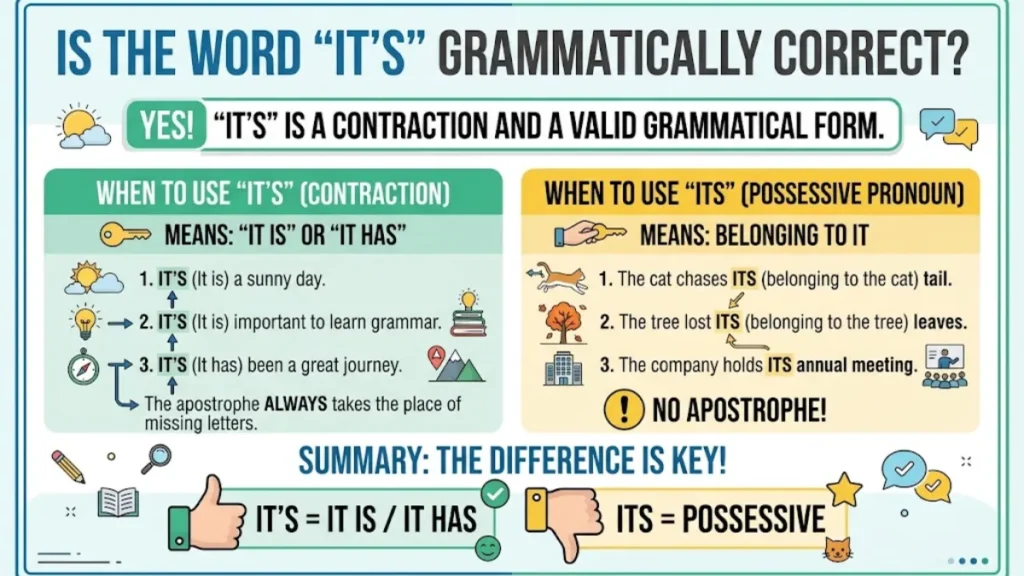
Yes. “It’s” is a standard contraction of “it is” or “it has.” It is grammatically correct in both formal and informal writing, as long as it is not confused with the possessive “its.” This is the same kind of small but important rule that trips writers up with encorporate vs incorporate, where a single prefix changes correctness entirely.
What Is It’s Called Instead of It Is?
“It’s called” is simply “it is called” written as a contraction. Both phrases mean exactly the same thing and can be used interchangeably in most writing. “It’s called photosynthesis” and “it is called photosynthesis” carry identical meaning; the contraction is just shorter and more conversational. Formal writing sometimes expands the contraction, much like how technical guides prefer the fully spelled version of encode vs incode instead of shorthand.
When to Use It vs Its?
Use “it” as a subject or object pronoun replacing a noun, as in “It is raining” or “I saw it yesterday.” Use “its” only to show possession, as in “The company updated its policy.” Never use an apostrophe in the possessive form. This mistake is common enough that it ranks alongside grately vs greatly as one of the most frequently searched grammar corrections online.
What Is the Difference Between “It” and “Its”?
“It” is a pronoun that stands in for a thing, animal, or idea already mentioned. “Its” is the possessive form of that same pronoun, showing that something belongs to “it.” Unlike most possessives, “its” never takes an apostrophe. Confusing the two is comparable to mixing up submission vs submittion, where writers add or drop a letter without realizing the impact on correctness.
How to Remember Its vs It’s?
A reliable memory trick: expand the word in your head. If “it is” fits the sentence, use “it’s.” If ownership is being described, use “its.” You can also picture other homophone pairs you already handle carefully, like ladle vs ladel, and apply the same mental substitution test before you hit publish.
Common Mistakes
Here are the most frequent errors writers make with it’s called vs it called:
- Writing “its called” without an apostrophe when naming something.
- Using “it called” when the sentence actually needs “it’s called.”
- Confusing possession with contraction, similar to how people mix up scarey vs scary in casual writing.
- Overusing the past-tense form “it called” outside of an actual calling action.
- Assuming both phrases are always interchangeable, which they are not.
Every one of these mistakes stems from the same root confusion: mixing up a contraction, a possessive, and a past-tense verb that all sound nearly identical out loud. Reading your sentence aloud is often the fastest way to catch an it’s called vs it called slip before you publish.
Its Called vs It Called: Comparison Table
| Phrase | Correct Usage | Example |
| It’s called | Naming or defining something | It’s called a spatula. |
| It called | Past tense action of calling | It called for backup. |
| Its called | Always incorrect | Never use this form. |
This table makes it’s called vs it called easy to reference whenever you’re proofreading, in the same way a quick check against acception vs exception can save you from an embarrassing typo.
Is It So Called or So-Called?
“So-called” is the correct, hyphenated form when used as an adjective before a noun, such as “the so-called expert.” Without the hyphen, “so called” can appear in a sentence like “What is this so called?” but the hyphenated adjective form is far more common and preferred in professional writing. This is a separate rule from it’s called vs it called, but the two are easy to mix up because both involve small, easy-to-miss punctuation marks.
What Is Another Word for “Called”?
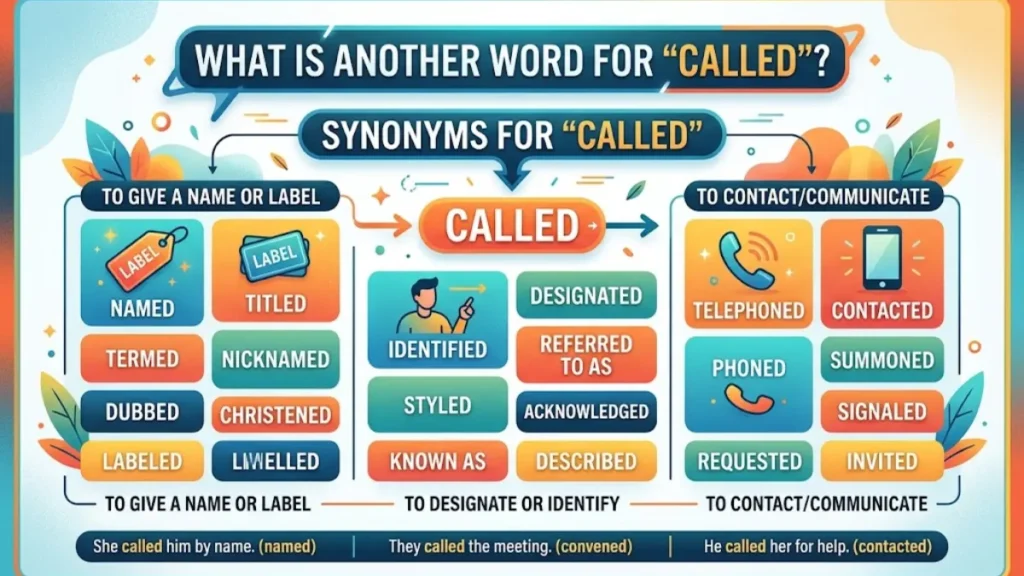
Depending on context, you can replace “called” with named, termed, labeled, known as, or referred to as. These synonyms work well when you want to avoid repeating it’s called vs it called too many times in a single piece of writing, especially in long-form content or academic papers.
American vs British English
Both American and British English accept “it’s called” as the standard way to introduce a name. The difference lies more in surrounding vocabulary choices than in the grammar rule itself, and neither dialect changes the underlying logic of it’s called vs it called.
Why Do Brits Say “Called” Instead of “Named”?
British English speakers often favor “called” over “named” in casual conversation, treating the two as near-synonyms. American English tends to use “named” slightly more often in formal contexts, but both regions accept it’s called vs it called under the exact same grammar rule, much like both dialects agree on the correct spelling of targeted vs targetted despite regional habits.
Named vs Called
Before comparing named and called, it helps to revisit the it’s called vs it called rule one more time, since both phrases rely on the same underlying grammar.
“Named” and “called” are close synonyms, but “named” often implies an official or formal title, while “called” can describe a nickname, common term, or everyday label. “The award-winning documentary was named Best Picture” sounds more formal than “Everyone just called it ‘the blue house.'” Choosing between the two is a style decision rather than a strict grammar rule, unlike the it’s called vs it called distinction, which is governed by a firm rule about contractions and possessives.
Examples in Everyday Sentences
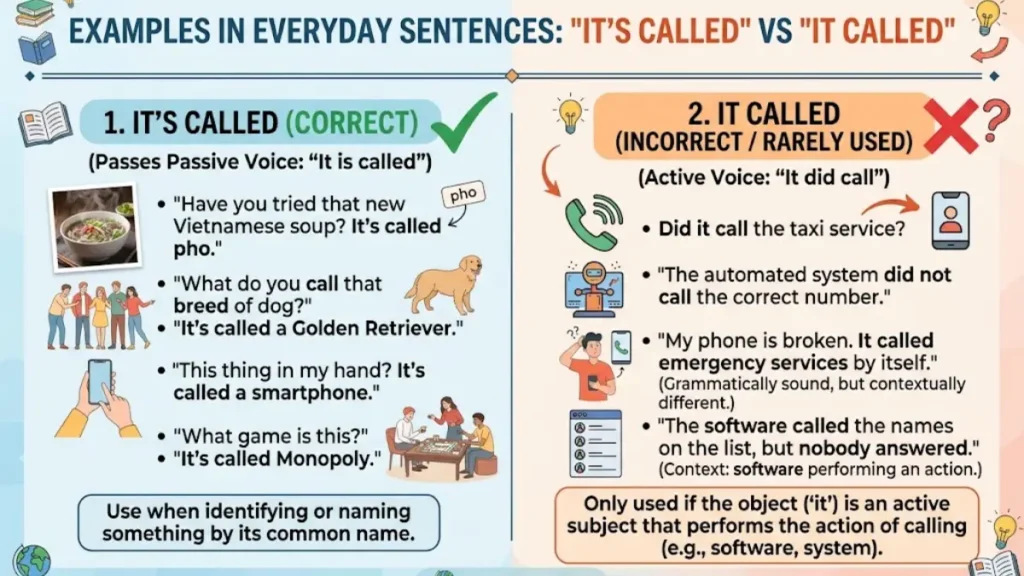
The best way to lock in the it’s called vs it called rule is to see it working in real sentences:
- It’s called a thesaurus.
- What’s this dish called? It’s called paella.
- The phone rang twice, then it called again.
- It’s called imposter syndrome.
- She called it a masterpiece.
Reading through real examples like these is one of the fastest ways to internalize it’s called vs it called, because your ear starts to recognize the correct rhythm even before your brain finishes the grammar rule.
FAQs
Is “it’s called” or “it called” correct?
For it’s called vs it called, “It’s called” is correct when naming or identifying something. “It called” only works in past-tense action sentences.
What does “it’s called” mean?
In the it’s called vs it called comparison, it means “it is called,” used to introduce the name or label of something.
Is “its called” ever correct?
No. “Its called” without an apostrophe is always grammatically incorrect.
What is the difference between “it” and “its”?
“It” is a pronoun; “its” is the possessive form showing ownership, with no apostrophe.
How can I remember when to use “it’s” vs “its”?
Expand it mentally: if “it is” fits, use “it’s.” If showing possession, use “its.”
Is “it’s called” the same as “it is called”?
Yes, “it’s called” is simply the contracted form of “it is called.”
What is another word for “called”?
Common alternatives include named, termed, labeled, and known as.
Is “so called” or “so-called” correct?
“So-called” with a hyphen is correct when used as an adjective before a noun.
Do British and American English use “called” differently?
Not grammatically; both dialects follow the same rule, with only minor vocabulary preferences.
When should I use “it called” instead of “it’s called”?
Only when “it” performed the physical action of calling in the past tense.
Summary
Mastering it’s called vs it called comes down to one simple test: if you can replace “it’s” with “it is” and the sentence still works, you have the right phrase. “It’s called” handles naming and defining, while “it called” is reserved for rare past-tense actions. Keep this guide handy, along with your notes on tricky pairs like reinforce or reenforce, and you’ll write with confidence every time.
